神明的財庫
One of the most striking characteristics of Taiwanese culture is the prevalence of temples.
台灣特殊文化之一就是隨處可見的廟宇。
striking(adj.)引人注目的characteristic(n.)特色prevalence(n.)存在
Regardless of the deity worshiped within, temples often draw large crowds of devotees to their doors.
不論裡頭供奉著什麼神,時常吸引大批信眾前往參拜。
regardless of無論deity(n.)神明worship(v.)信奉、崇拜draw(v.)吸引devotee(n.)崇拜者、信眾
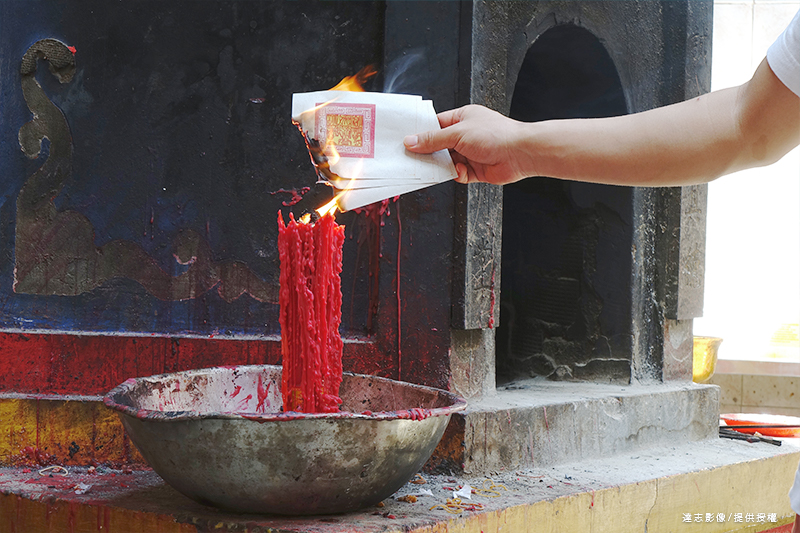
Of the many ceremonies that take place in the temples, the one that visitors from western countries are most curious about has to be the practice of offering incense sticks and burning joss paper.
而過程中最令西方遊客充滿新鮮感的,就是上香、燒紙錢的儀式了。
ceremony(n.)儀式curious(adj.)好奇的practice(n.)習俗、做法offer(v.)提供incense stick線香burn(v.)焚燒joss paper紙錢
What does this ritual really mean? Perhaps our western friends are not the only ones who are confused. Many of us could use an explanation as well!
說到這個習俗,或許不光是西方訪客疑惑,可能連我們自己都不確定答案呢!
ritual(n.)儀式confused(adj.)困惑的explanation(n.)解釋
Incense forms a bridge of communication between mortals and spirits.
「香」是人與神之間的通訊物。
incense(n.)香、香燭form(v.)形成communication(n.)溝通mortal(n.)凡人spirit(n.)靈魂
When one lights up an incense stick, the rising smoke act as a “signal”—not altogether unlike the electromagnetic waves used to transmit messages in our modern world—to transmit our hopes and wishes to the deities.
透過燒香,裊裊飄升的煙成為呼喚的信號,好比如今電磁波般,人們相信能把祈願信息傳達給神明。
light up點燃incense stick線香signal(n.)訊號altogether(adv.)全然electromagnetic(adj.)電磁波的transmit(v.)發送deity(n.)神明
Other offerings are usually presented to deities together with incense. In the past, incense was used as a measure of time, with the burning of one incense stick marking two quarters of an hour. Now, that is more commonly referred to as 30 minutes. This definition conveys the sense that the burning of the incense gives believers time to convey their wishes to the deities, and at the same time provides a window for deities to enjoy the offerings prepared by their devotees.
伴隨著供品,古代稱一炷香時間兩刻鐘,相較於現在的半小時,換言之,香菸將會在燃燒過程中,給予信奉者時間溝通祈福,也給予神明享用供品時間。
offering(n.)供品、祭品deity(n.)神明incense(n.)香燭measure(n.)計量burn(v.)焚燒incense stick線香quarter(n.)四分之一refer to談到、涉及definition(n.)定義convey(v.)表達believer(n.)信仰者deity(n.)神明devotee(n.)崇拜者、信眾
Studies in religion and history have found that the burning of joss, or paper money, stems from the Chinese people’s custom of ancestor worship.
宗教歷史學說認為燒紙錢文化源於中國人祭祖的習俗,
religion(n.)宗教burn(v.)焚燒custom(n.)習俗ancestor(n.)祖先worship(v.)崇拜、信奉
The Chinese have a tradition of “honoring the deceased in death as they would in life,” which means that one ought to treat a dead person with the same respect accorded to the living.
傳統有「事死如事生」的觀念,當人死後要如生前般侍奉他,
honor(v.)致敬deceased(n.)已故者ought to應該treat(v.)對待respect(n.)尊重
This is why we offer joss paper to the deceased, so that they will have money to spend in the netherworld.
因此有給予金錢讓他享用的作法,
joss paper紙錢deceased(n.)已故者
In the beginning, people buried their dead with real money, but this practice attracted the unwanted attention of grave robbers, so people started to use ceramic items or fake money in place of real money in burials.
起初是以真錢陪葬,後因發生盜墓,改以陶製或假錢陪葬,
bury(v.)埋葬practice(n.)做法attract(v.)吸引attention(n.)注意grave robber盜墓者burial(n.)埋葬
The custom gradually evolved to become what we see today; which is the burning of joss paper as a monetary offering to the dead.
最後演變為燒紙錢。
custom(n.)習俗gradually(adv.)逐漸地evolve(v.)演變burn(v.)焚燒joss paper紙錢monetary(adj.)金錢的offering(n.)供品
As most deities are mortals who attained their immortality after years of meditation and cultivation, ceremonies used to honor the dead are also used to honor deities as a form of respect.
由於神明也往往是凡人修成的,所以將習俗沿用以表尊奉。
deity(n.)神明mortal(n.)凡人attain(v.)實現immortality(n.)永生meditation(n.)冥想cultivation(n.)陶冶ceremony(n.)儀式honor(v.)致敬deity(n.)神明form(n.)形式respect(n.)尊重