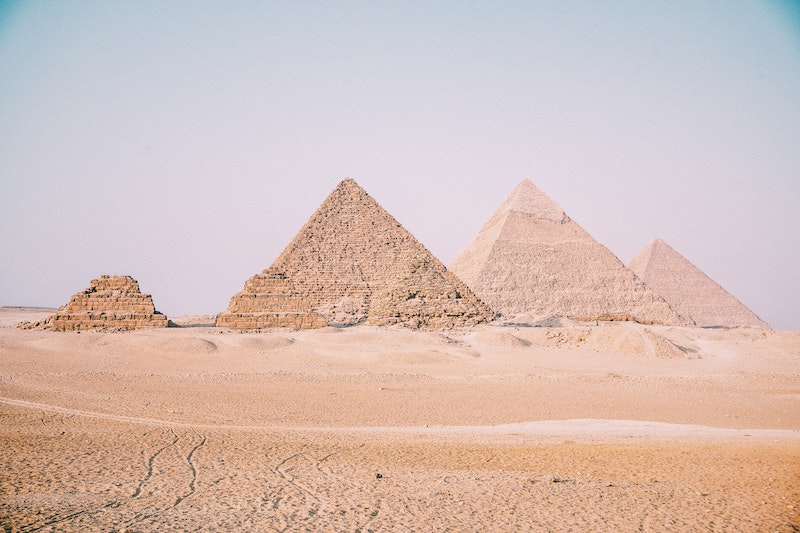
死後成神的法老王
The pyramids of Giza were built around 4,500 years ago.
吉薩金字塔群建於約4,500年前。
build(v.)建造
The pharaohs of ancient Egypt believed they would become gods in the afterlife, so these pyramid tombs were supposed to prepare them for the next world.
古埃及法老王相信他們死後會成為神,因此這些金字塔陵墓被認為可讓法老王通往另一個世界。
ancient(adj.)古老的;年代久遠tomb(n.)陵墓;墓室;墳墓cemetery(n.)墓地;公墓graveyard(n.)靠近教堂的墓園或墓地gravestone(n.)墓碑be supposed to RV=被認為…;被期待或有義務做某事prepare sb. for sth.=使某人為某事做好準備
The first Giza pyramid project began at around 2,550 B.C.
第一座吉薩金字塔工程約始於公元前2,550年,
project(n.)工程begin-began-begunB.C.=Before Christ公元前A.D.=Anno Domini公元;西元
It is the largest and stands at 147 meters.
是金字塔群中最大的金字塔,高度147公尺,
large-larger-largeststand at=高度為
It has about 2.3 million stone blocks that weigh between 2.5 to 15 tons.
由約230萬塊石磚建成,每塊石磚重達2.5至15公噸不等。
block(n.)磚塊weigh(v.)重達…;秤重weight(n.)重量
The second pyramid was built around 2,520 B.C., and it includes the famous Sphinx, a monument with the body of a lion and a pharaoh’s head.
第二座金字塔約建於公元前2,520年,包括法老王的人面獅身像「史芬克斯」。
monument(n.)紀念碑statue(n.)雕像
The last pyramid is smaller than the first two and was built around 2,490 B.C.
最後一座金字塔體積小於前述的兩座金字塔,並約建於公元前2,490年。
small-smaller-smallest
These pyramids are so impressive that even today, scientists can’t be sure how they were built.
時至今日,這些金字塔仍叫人驚嘆不已,科學家也不確定埃及人是怎麼把金字塔建出來的。
impressive(adj.)令人印象深刻的impress(v.)給…留下深刻印象so adj. that…=如此…以致於…
Egyptologist Peter Der Manuelian says that these pyramids are more than just a place for the dead.
埃及古物學家曼努埃爾表示這些金字塔不只是埋葬死者的地方,
more than=超過;不止;不僅僅the dead=dead people死者the poor=poor people窮人the rich=rich people有錢人
“In these decorated tombs you have wonderful scenes of every aspect of life in ancient Egypt—so it’s not just about how Egyptians died but how they lived.”
「在這些裝飾精美的墓室,你可以看到古埃及生活的各個面向,因此金字塔並非只是反映出埃及人怎麼死去,也是他們人生的映照。」
decorate(v.)裝飾