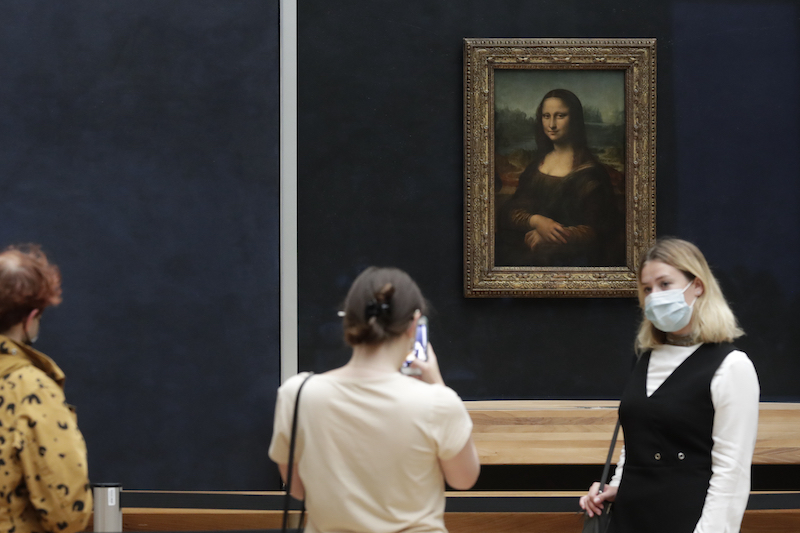
坐輪椅的婦人
Fiona and Peter are friends. They are chatting.
費歐娜和彼得是朋友。他們正在閒聊。
be Ving=現在進行式
Peter: Check out this news. A man threw a cake at the Mona Lisa.
彼得:看這個新聞。有個男子朝蒙娜麗莎丟蛋糕。
check out=看一看throw sth at=朝~丟某物;動詞三態throw-threw-thrown=丟躑
Fiona: The well-known painting by Leonardo da Vinci?
費歐娜:那幅出自李奧納多達文西之手的世界名畫?
well-known=眾人皆知的=famous
Peter: Is there any other?
彼得:難道還有別的嗎?
Fiona: That’s shocking. Why did he do that?
費歐娜:真是太嚇人了。他為什麼這麼做?
shock(v.)驚嚇
Peter: The news said the man may have wanted to call attention to environmental issues. But no one is certain about his reason.
彼得:新聞說那名男子也許想要呼籲大家關注環境議題。但沒有人能確認他真正的動機。
call attention to=呼籲關注某事物draw attention=吸引注意certain(adj.)確定的reason(n.)理由
Fiona: Well, he could have done it in other ways.
費歐娜:嗯,他應該可以採取其他的做法。
could have p.p.=本能夠卻沒有做
Peter: Thankfully, the art piece was protected by a glass case.
彼得:值得感謝的是,畫作有玻璃外殼的保護。
piece(n.)作品be p.p.=被動態
Fiona: That’s good to know. But how did he get so close to it anyway?
費歐娜:那是好消息,但他到底是怎麼樣靠近那幅畫的?
close(adj.)靠近的anyway(adv.)反正;言歸正傳
Peter: Normally, there were many people around, but he did something unexpected.
彼得:通常來說,畫作周遭會有很多人圍繞著,但他做了件讓人意外的事。
normally(adv.)通常unexpected(adj.)出乎預料的
Fiona: What did he do?
費歐娜:他做了什麼事?
Peter: He dressed up as an old lady in a wheelchair to get to the front of the crowd.
彼得:他扮裝成一位坐輪椅的婦人好湊到人群的前方。
dress up as=喬裝為某個角色wheelchair(n.)輪椅crowd(n.)群眾;crowded(adj.)擁擠的
Fiona: No wonder no one saw his attack coming.
費歐娜:難怪沒有人預想到他的攻擊。
no wonder=難怪see sth coming=預見某件事的發生attack(n.)攻擊