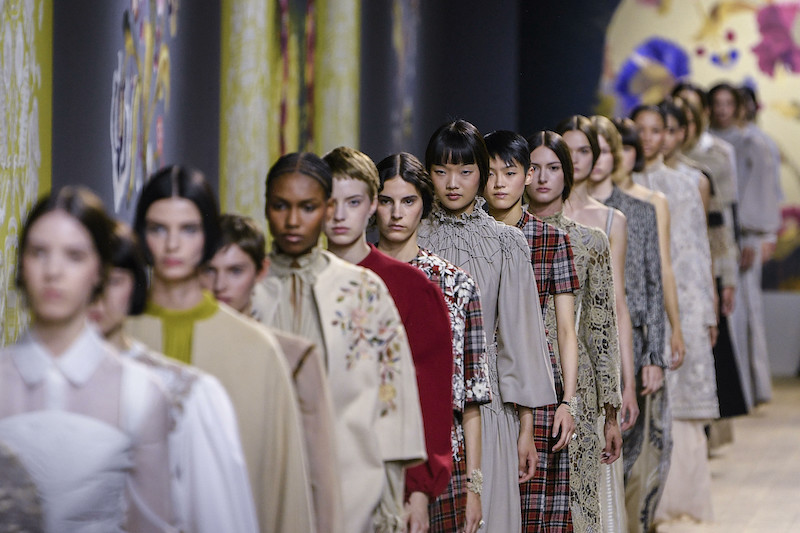
中國旅法學生抗議
Joyce and William are friends. They are talking about recent news.
喬伊斯與威廉是朋友。他們在討論最近的新聞。
Joyce: Have you seen the news about Chinese students in France staging a protest over Dior’s new skirt?
喬伊絲:你有看到中國旅法學生對迪奧推出的新裙發起抗議的新聞嗎?
stage(v.)舉辦、舉行
William: I have. They said that the skirt’s design copied Hanfu, the traditional style of clothing worn by the Han Chinese during the Ming dynasty.
威廉:有啊,他們聲稱裙子設計抄襲明代傳統漢服。
design(n.)(v.)設計copy(v.)抄襲、模仿make a copy 複製、複印copycat(n.)抄襲者、模仿者traditional(adj.)傳統的wear-wore-worn
Joyce: The protesters think that Dior shows no respect for Chinese culture.
喬伊絲:抗議者認為迪奧不尊重中國文化。
protester(n.)(亦可寫作protestor)抗議者respect(n.)(v.)尊重、尊敬disrespect(n.)(v.)不尊重、不尊敬
William: A guy was attacked because he was holding a sign that said, “Skirts are more important than human rights.”
威廉:一名男子因為高舉寫著「裙子比人權重要」的牌子而遭到攻擊。
attack(v.)(n.)攻擊important(adj.)重要的
Joyce: But Dior said the skirt is original.
喬伊絲:但迪奧表示那件裙子是原創設計。
original(adj.)原創的、獨創的
William: I think it’s hard to tell whether Dior copied the design. Fashion designers often take inspiration from different cultures.
威廉:我認為很難判斷迪奧是否有抄襲設計。時裝設計師往往會從不同文化中取得靈感。
inspiration(n.)靈感
Joyce: I can’t agree more. There is a fine line between copying a design and using it as a reference.
喬伊絲:我認同。抄襲設計與參考設計只有一線之隔。
I can’t agree more 非常認同a fine (thin) line between A and B A與B之間只有一線之隔reference(n.)參考