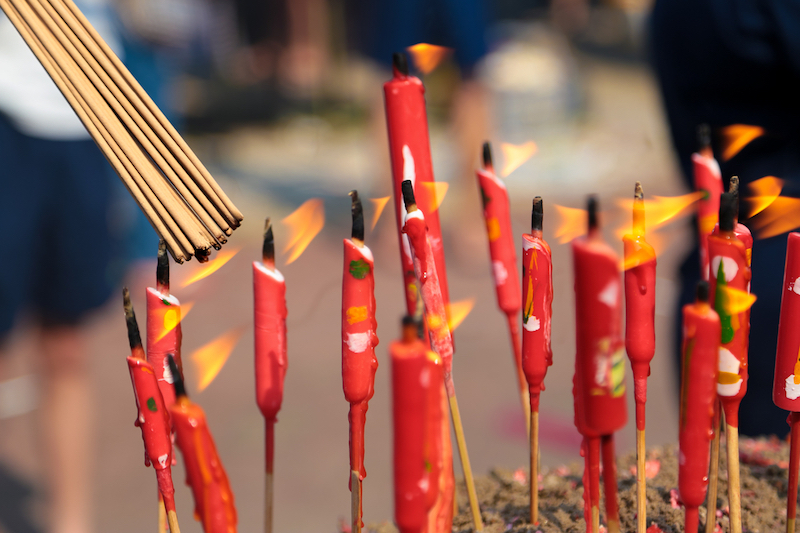
掃墓祭祖
Kyle and Elsa are a couple. They are having a conversation.
凱爾和艾莎是一對情侶。他們正在對話。
Elsa: Kyle, do you know about Tomb Sweeping Day in Taiwan?
艾莎:凱爾,你知道台灣的清明節嗎?
Kyle: No, what’s that about?
凱爾:不知道,那是什麼?
Elsa: It’s a day when Taiwanese families visit their ancestors’ graves.
艾莎:那是台灣家庭探望祖先墳墓的日子。
ancestor(n.)祖先grave(n.)墳墓、墓穴
Kyle: What do they do on that day?
凱爾:那一天他們會做什麼?
Elsa: First, they clean the tomb, then they give offerings, light incense and pray, and finally, they burn joss paper.
艾莎:首先,他們會清理墳墓,然後獻上供品,燒香拜拜,最後,他們會燒紙錢。
offering(n.)供品incense(n.)香an incense burner香爐pray(v.)禱告、祈禱、祈求、拜拜joss stick線香
Kyle: What offerings do they give?
凱爾:他們會獻上什麼供品?
Elsa: They usually offer rice, liquor, fruits and flowers.
艾莎:他們通常會獻上米飯、酒、水果和鮮花。
offer(v.)主動給予、提供、供給
Kyle: And what is joss paper?
凱爾:還有紙錢是什麼?
Elsa: Joss paper is also called ghost money. It is money for their ancestors to spend in their afterlife.
艾莎:紙錢也叫做冥紙。是供他們的祖先在來世花用的錢。
Kyle: Oh, interesting. When is it?
凱爾:喔,有意思。那是什麼時候?
Elsa: It’s usually in April, around the 4th, 5th, or 6th.
艾莎:通常是在四月份,大約在四、五、六號左右。
Kyle: Cool. What else do they do?
凱爾:太酷了。他們還會做什麼?
Elsa: Well, after visiting the grave, families often make and enjoy spring rolls together.
艾莎:嗯,在探望墳墓後,家人們通常會一起製作並享用春捲。
often(adv.)時常(be動詞之後,一般動詞之前)enjoy(v.)喜愛、享受
Kyle: Sounds like a great day.
凱爾:聽起來像是一個很棒的日子。
sound like聽起來像、似乎
Elsa: Yeah, it’s a time to remember their ancestors. Would you like to join me this year?
艾莎:是啊,這是一種紀念祖先的時刻。今年你想和我一起去嗎?
would like to想要
Kyle: Sure, I’d love to learn more about it.
凱爾:當然,我想了解更多。
would love to想要