千萬不要買柿子
Kathy and Ivan are roommates. Ivan just came back from work.
凱西跟艾文是室友,艾文剛下班回來。
Kathy: Hey, how was work?
凱西:嘿,今天工作如何?
Ivan: I don’t know what to say. It just wasn’t my day, I guess. I was made a scapegoat for the team’s failure.
艾文:我不知道該怎麼說,今天超衰。我變成團隊疏失的替罪羊。
scapegoat(n.)代罪羔羊failure(n.)錯誤
Kathy: What? That’s ridiculous.
凱西:什麼?這太荒謬了吧。
ridiculous(adj.)荒謬的
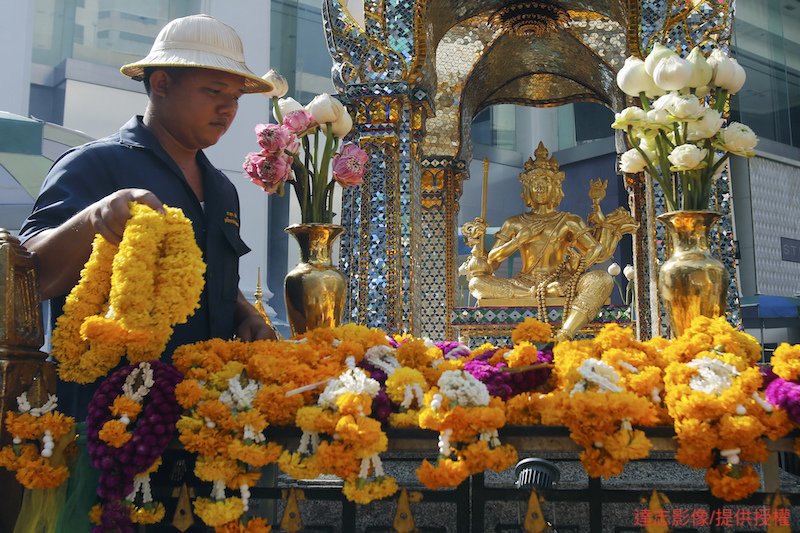
Ivan: Totally. I’m thinking about going to worship Phra Phrom this weekend. Do you want to go with me?
艾文:真的,我在想週末去拜四面佛,要一起去嗎?
think about思考worship(v.)敬神、參拜
Kathy: I can do Saturday afternoon. That’s funny, I just happened to read an article about Phra Phrom this morning.
凱西:我週六下午有空,而且有趣的是,我剛好早上有讀到一篇關於四面佛的文章。
happen to碰巧⋯⋯
Ivan: Really? Cool. I only know that we should always go back and thank Phra Phrom if our wishes come true.
艾文:好棒,我只知道如果願望實現,一定要回去跟四面佛還願。
thank(v.)感謝wish(n.)願望
Kathy: That’s right. And we can prepare some fruits like apples, dragon fruits and bananas. However, we should avoid persimmon because it sounds like “bad things” in Thai.
凱西:沒錯,另外我們可以準備像是蘋果、火龍果跟香蕉等水果,不過要避免拜柿子,因為柿子在泰文中聽起來像「壞事」。
prepare(v.)準備avoid(v.)避免persimmon(n.)柿子
Ivan: I see. I’ll remember that when I go to buy offerings.
艾文:我懂了,我買供品時會記住的。
remember(v.)記得offering(n.)供品