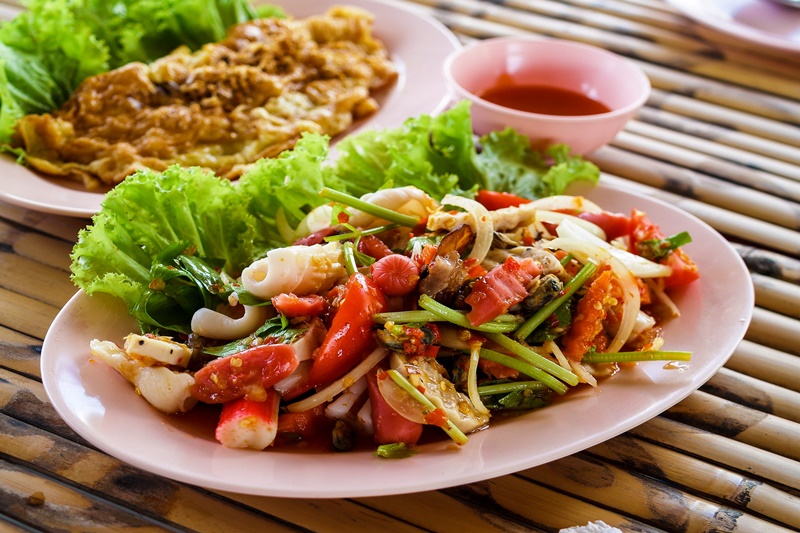
遠離生海鮮
Hugo is travelling in Thailand with his friends.
雨果和朋友們去泰國旅遊。
Hugo: Hi, excuse me. We’re tourists here. May I ask you some questions?
雨果:嗨,打擾一下,我們是遊客,我能問妳一些問題嗎?
excuse(v.)原諒、寬恕tourist(n.)遊客、觀光客may(aux.)可以、能
Holly: Sure. What do you want to know?
荷莉:嗨,當然好啊,你們想要知道什麼?
sure(adv.)當然
Hugo: Do you know how this restaurant is? We heard it’s pretty good.
雨果:妳知道這間餐廳如何嗎?我們聽說它很棒哩。
hear(v.)聽說pretty(adv.)很、非常
Holly: Right. It’s great, but the food there is pretty hot. If you’re not used to overly spicy food, you’d be better off not dining here.
荷莉:是啊,這間餐廳很棒,但那裡的食物滿辣的。如果你們不習慣過辣的食物,最好不要在那裡吃飯。
hot(adj.)辣的if(conj.)如果、假如overly(adv.)太、非常、過度地spicy(adj.)辛辣的off(adv.)遠離dine(v.)吃正餐
Hugo: Really? That’s a good point. So what’s the best way to enjoy Thai food here – I mean, what types of food or dishes would you recommend that we eat?
雨果:真的嗎?那是個很好的意見耶。那要享受泰式食物最好的方式是什麼呢?我的意思是,妳建議我們吃哪類的食物或菜餚呢?
point(n.)意見、觀點Thai(adj.)泰國的mean(v.)意思是dish(n.)菜餚recommend(v.)推薦
Holly: Well, first of all, cleanliness is very important when it comes to street food. The general rule of thumb is: if you see a lot of customers at a food stand, chances are, the food there is pretty safe and clean.
荷莉:嗯,首先,提到街頭小吃時,乾淨衛生是最重要的。普遍的經驗法則是:假如一間攤販的客人愈多,它的食物可能愈乾淨愈安全。
cleanliness(n.)乾淨when it comes to…提到…general(adj.)普遍的、總的rule of thumb經驗法則、經驗之談customer(n.)客戶、顧客chance(n.)機會、可能性
Hugo: That’s so true. We don’t want to end up running to the toilet after the meal.
雨果:那是真的,我們不想要最後變得要跑廁所。
so(adv.)很、非常true(adj.)真的、真實的end up最終成為
Holly: Also, it’s better to stay away from uncooked seafood and go for freshly cooked meals.
荷莉:另外,最好是遠離生的海鮮、選擇現煮的餐點。
stay(v.)保持stay away遠離uncooked(adj.)未煮的go for選擇freshly(adv.)剛剛
Hugo: Okay! That really helps. Thank you so much for the useful information. Have a nice day!
雨果:哇,非常感謝妳的幫忙,謝謝妳提供我們這些實用的資訊,祝妳有美好的一天。
useful(adj.)有用的、有幫助的information(n.)資訊、訊息