讓自己與社會分離
If you have been to Japan in the past few years, you probably have noticed a large number of Japanese people wearing face masks on the streets.
如果你近幾年曾去過日本,你可能已經發現到有非常多的日本人戴口罩上街。
past(adj.)過去的few(adj.)幾個notice(v.)注意到
Are they sick? Do they have allergies? What are the real reasons that so many Japanese choose to wear face masks?
他們生病了嗎?他們過敏了嗎?他們戴口罩的真正原因究竟是什麼?
allergy(n.)過敏症be allergic to對~過敏
While many people wear masks for health concerns, sociologists take a different perspective on this phenomenon.
許多人戴口罩是為了健康考量,但社會學家對這個現象採取一個較為不同的觀點。
while(conj.)儘管concern(n.)考量、顧慮sociologist(n.)社會學家take a perspective on對~採取觀點phenomenon(n.)現象
Juvenile psychologist Jun Fujikake points out that young people tend to hide themselves behind a mask in order to avoid having any sort of contact with others.
青少年心理學家Jun Fujikake指出:年輕人將自己藏在口罩後面,以避免和他人有任何形式的接觸。
juvenile(adj.)青少年的psychologist(n.)心理學家point out=indicate指出tend to RV傾向於、易於avoid Ving(N)避免做某事contact(n.)接觸
The unwillingness to communicate with others in person may stem from the current youth culture where young people are more used to communicating indirectly through email and social media.
這種拒絕和他人當面交流的行為可能源自於目前年輕人的文化形態,他們較習慣以較不直接的方式如透過電子郵件或社群媒體來與人溝通。
unwillingness(n.)不願意communicate with sb與人交流in person面對面stem from源自於=originate frombe used to N(Ving)習慣於
A 46-year-old mother commented on this phenomenon by using her high-school-age daughter as an example:
一位46歲的母親用他就讀高中的女兒作為例子來呼應了這個現象:
comment on對~發表評論=make a comment on
“She puts on a mask and sticks her earphones in her ears so that people won’t bother her.”
「他戴上口罩,把耳機塞進耳朵,這樣別人就不會打擾到她。」
put on戴上stick(v.)塞進so that以便
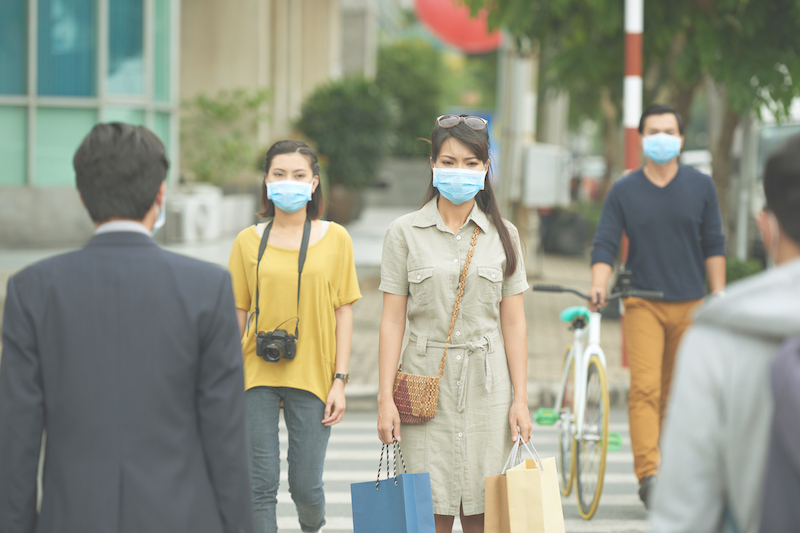
It seems that masks have become a tool for young people to create a separation between themselves and society, signaling the younger generation’s lack of desire to communicate with the outside world.
口罩似乎已成為一個工具,讓年輕人把自己與社會分離,顯示出年輕世代缺乏與外界溝通的意願。
separation(n.)分離、隔離signal(v.)顯示出=show=indicatelack(n.)缺乏desire(n.)渴望