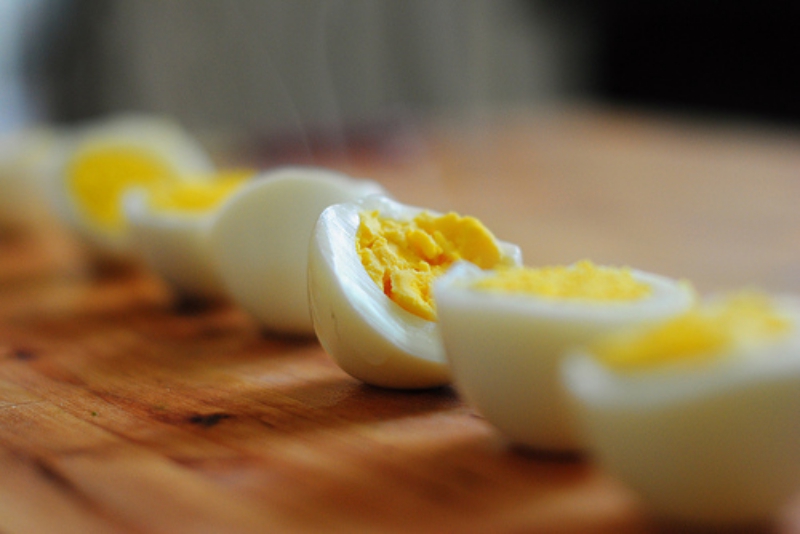
無鹽無油
Sara and Sid are roommates.
莎拉和席德是室友。
Sid: Good morning, Sara. Wow, you really do like your boiled eggs for breakfast, don’t you?
席德:早安,莎拉。哇,你早餐很愛吃水煮蛋,是嗎?
do(aux.)(用於強調主要動詞like)
Sara: Morning, Sid. Yes, I do. You do know that boiled eggs are really good for our bodies, don’t you?
莎拉:早啊,席德。是啊,你知道水煮蛋對身體很好,對吧?
be good for對…有益
Sid: Oh, are they? I didn’t know that.
席德:噢是嗎?我不知道這件事耶。
did(aux.)(do的過去式)
Sara: Boiled eggs make us full easily, so they help us lose weight. The yolks are good for our eyes as well as our brain.
莎拉:水煮蛋讓我們更容易飽,所以能幫助我們減重。蛋黃對眼睛和大腦有益呢。
make=become(v.)使變得full(adj.)飽的lose weight減肥、減重yolk(n.)蛋黃as well as=and和、以及brain(n.)大腦
Sid: Hmm…… I do get full easily when I eat boiled eggs.
席德:嗯…我吃水煮蛋時的確會很容易飽。
get=make=become(v.)變得when(conj.)當…
Sara: Also, they’re high in protein, so they’re a great source of nutrition for our bodies.
莎拉:還有,它也富含蛋白質,是身體獲取營養一個很棒的來源哦。
high in sth.富含…source(n.)來源nutrition(n.)營養
Sid: So question: Are fried eggs and scrambled eggs just as good for our bodies as boiled eggs are?
席德:那問題來了:荷包蛋或炒蛋也和水煮蛋一樣好嗎?
fried egg煎蛋scrambled egg炒蛋as…as…與…一樣…
Sara: The eggs lose some of their nutrients when you fry them, so having boiled eggs is a better choice.
莎拉:雞蛋過油會流失更多的營養,所以吃水煮蛋更好。
lose(v.)失去nutrient(n.)營養素fry(v.)油煎、油炒、油炸choice(n.)選擇