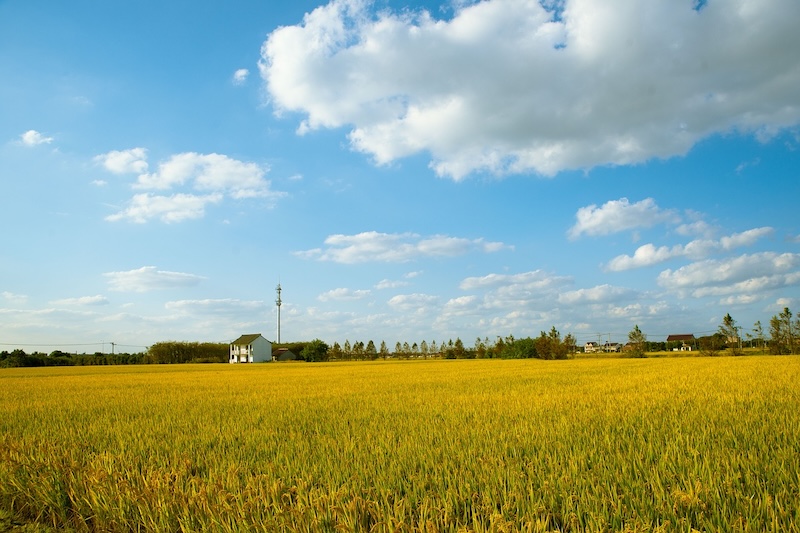
尊重自然資源
Sustainable agriculture is a movement in farming “that respects natural resources and does not use pollutants in order not to upset the environmental balance.”
永續農業是一種「尊重自然資源、不使用污染物以免擾亂環境平衡」的農業運動。
movement(n.)(社會或政治的)運動pollutant(n.)污染物upset(v.)打亂、擾亂balance(n.)平衡strike a balance between A and B 在A與B之間取得平衡
Through this approach to agriculture, farmers seek to “work with nature” to maximize the production of crops for food and other human needs in the present while minimizing the negative environmental impacts of farming on future generations.
透過這種農業方式,農民希望「與自然共處」,最大限度地提高作物產量,以滿足當前的糧食和其他人類需求,同時將農業對後代的負面環境影響降到最低。
approach(n.)方式;方法adopt(v.)採用;採納seek to VR尋求maximize(v.)使最大化minimize(v.)使最小化、使降到最低impact on...對~的影響、衝擊
There is no single universally used method of sustainable agriculture.
永續農業沒有一套普遍適用的方法。
single(adj.)單一的universe(n.)宇宙、universal(adj.)普遍的、全體的universally(adv.)普遍地
Instead, the concept is based on several key principles aimed at benefiting the environment, local economies and society as a whole.
相反地,這個概念是以幾個主要原則為基礎,旨在造福環境、當地經濟和整體社會。
instead(adv.)相反地=on the contraryconcept(n.)概念grasp an abstract concept理解抽象的概念(be) aimed at...以~為目標as a whole總體上;整個看來
According to the U.N.’s Food and Agriculture Organization, these include: increasing productivity and employment in food systems, protecting natural resources, improving the livelihoods of farmers and enhancing “the resilience of people, communities and ecosystems.”
根據聯合國糧食及農業組織的說法,這些原則包括提高糧食系統的生產力和就業機會、保護自然資源、改善農民的生計,並增強「人、社群和生態系統的韌性」。
productivity(n.)生產力、productive(adj.)生產力高的、多產的employment(n.)就業livelihood(n.)生計enhance(v.)增進=improve=boostresilience(n.)韌性、恢復力、彈性
The environmental benefits of sustainable agriculture come from the careful agricultural techniques used by farmers, such as “crop rotation, intercropping and companion planting.”
永續農業的環境效益來自農民精心採用的農業技術,如「輪作、間作和伴生種植」。
come from來自;源自於=stem fromtechnique(n.)技術crop rotation輪作in rotation輪換;輪流;交替intercropping間作companion planting伴生種植
In each of these approaches, different crops are planted — either in succession or simultaneously — to naturally “protect soil health and water quality,” thus eliminating the need for chemicals and other harmful farming practices.
在上述每種農法中,都會連續或同時種植不同作物,以自然地「保護土壤健康和水質」,從而消除對農藥和其他有害耕作方式的需求。
either A or B不是~就是~in succession連續、接連=in a rowsimultaneously(adv.)同時地simultaneous(adj.)同時的simultaneous interpretation同步口譯eliminate(v.)排除、消除、清除practice(n.)作法
As a result, agriculture can become more eco-friendly and less damaging to the climate.
因此,農業可以變得更環保,對氣候的衝擊也會減少。
eco-friendly(adj.)環保的=environmentally friendlydamaging(adj.)有害的;產生危害的=harmful
Sustainable agriculture also brings important economic and social benefits.
永續農業還帶來了重要的經濟和社會效益。
economic(adj.)經濟的economy(n.)經濟、節約economical(adj.)節儉的;節約的
By using fewer resources, it strengthens local farming economies, especially for small-scale farmers.
透過使用更少的資源,永續農業強化了當地的農業經濟,特別是對小農來說。
strengthen(v.)強化strength(n.)力量small-scale(adj.)小規模on a large scale大規模地on a small scale小規模地
This provides a major advantage over traditional farming, particularly in terms of food security.
在糧食安全方面,永續農業相比傳統農業有很大的優勢。
advantage(n.)優勢in terms of~就~而言
Thanks to the “efficient, stable, and resilient food system” created by sustainable practices, people can now — and in the future — rely on more affordable and consistent access to food.
由於永續農業實踐創造的「高效、穩定且有韌性的糧食系統」,現在和未來的人們都能以更經濟實惠的價格,持續獲得食物。
thanks to因為;由於=owing to=because ofrely on仰賴;依賴=depend onconsistent(adj.)始終如一的、持續的、一致的access to sth.取得、接近某事物的機會或權利have easy access to sth.能夠輕鬆取得某物