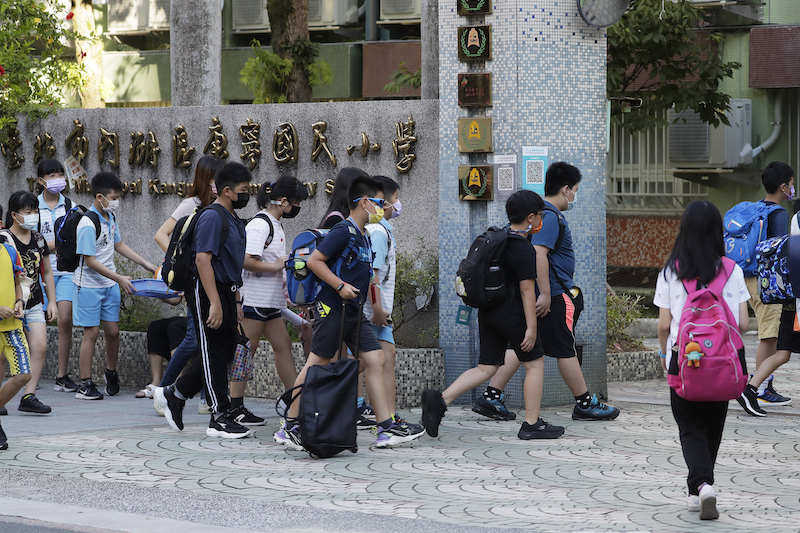
教育部明文規定
Ed and Molly are colleagues. They teach in the same school.
艾德和茉莉是同事。他們在同間學校教書。
colleague(n.)同事teach(v.)教學
Ed: Have you seen the news about the Ministry of Education’s new policy on uniforms?
艾德:你看到教育部新制服政策的新聞了嗎?
have p.p.=現在完成式policy(n.)政策
Molly: Have they decided to get rid of uniforms?
茉莉:他們決定要廢除制服了嗎?
decide(v.)決定get rid of=捨棄
Ed: No. They announced that students no longer have to have their names embroidered on their uniforms.
艾德:不是。他們宣布學生不再強制需要在制服上繡名字。
announce(v.)宣布no longer=再也不have to=必須要
Molly: As far as I know, some of them have been told by their schools to do so.
茉莉:就我所知,某些學生是被學校要求要這麼做的。
as far as I know=就我所知be p.p.=被動態
Ed: That’s true, but now schools cannot require students to have their names embroidered on their uniforms.
艾德:沒錯,但現在學校不能要求學生在制服上繡名字。
require(v.)要求
Molly: Why? I can’t remember all my students’ names.
茉莉:為什麼?我記不了我所有學生的名字。
remember(v.)記得
Ed: Well, I think it’s a good call. Names should be private information.
艾德:嗯,我覺得這決定很好。名字屬於隱私資訊。
a good call=好的決定private(adj.)私人的;隱私的information(n.)資訊
Molly: Letting other people know your name is not a big deal.
茉莉:讓別人知道你的名字又不是什麼大事。
a big deal=重要的人事物
Ed: Is it? Strangers can find out who you are simply by searching for your name online. That might not be a good idea.
艾德:不是嗎?陌生人只要在網路上搜尋你的名字,就能輕易得知你是誰。這可不是什麼好主意。
stranger(n.)陌生人find out=得知simply(adv.)輕易地
Molly: Now that you put it this way, it does seem a bit dangerous.
茉莉:你這樣說的話,的確有一點危險。
put it this way=換個方式說;以別的方式說明dangerous(adj.)危險的
Ed: But if both the school and the students agree to do so, they can still keep the practice.
艾德:但如果學生跟學校兩方都同意這麼做,他們還是可以保留這個制度。
agree(v.)同意keep the practice=保留此措施
Molly: I see. The policy makes sure that students can be part of the conversation.
茉莉:了解。政策確保了學生能夠參與討論。
be part of sth=參與某事;成為其中一部分conversation(n.)對話;討論