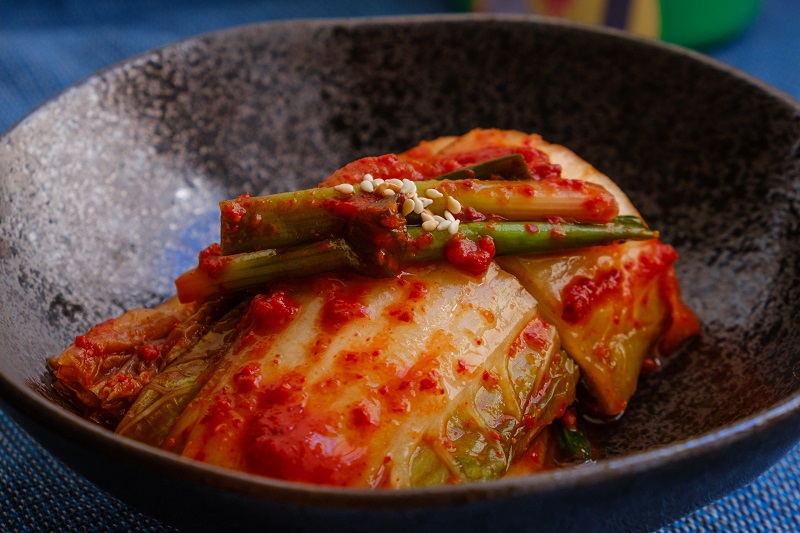
引發起源爭論
Adam and Becky are roommates. They are having spicy beef stew.
亞當和貝琪是室友。他們正在吃辣牛肉湯。
stew(n.)燉湯
Adam: I could really use some kimchi to go with the soup right now.
亞當:我現在好想吃點泡菜來配湯。
could use用得上go with搭配
Becky: Do you know there was a war over the name of kimchi between South Korea and China?
貝琪:你知道韓國和中國之前因為泡菜的名稱而大吵起來嗎?
war(n.)戰爭
Adam: Oh? I thought kimchi is from Korea.
亞當:哦?我以為泡菜就是韓國的。
Becky: The problem is the translation. You see, people often can’t tell the difference between the Chinese translation of “kimchi” and a similar fermented dish from Sichuan, “Paocai.”
貝琪:問題在於翻譯。人們常常分不清「泡菜」這個中文翻譯和四川一種的發酵食物「泡菜」之間的差異。
translation(n.)翻譯、translate(v.)tell the difference分辨差異similar(adj.)相似的fermented(adj.)發酵的dish(n.)料理
Adam: That is confusing.
亞當:的確很令人困惑。
confusing(adj.)令人費解的、困惑的
Becky: So, South Korean cultural authorities have given “kimchi” an official name in Mandarin.
貝琪:所以韓國文化當局制定了一個正式的中文譯名,就是「辛奇」。
cultural(adj.)文化的、culture(n.)authority(n.)當局、權威official(adj.)官方的in+語言
Adam: How did the Chinese react?
亞當:中國人的反應如何呢?
react(v.)反應、reaction(n.)
Becky: Upset, of course. Chinese and Korean netizens are arguing where this dish really belongs.
貝琪:當然很不滿囉。中韓網友都在爭論這泡菜究竟起源在哪裡。
upset(adj.)不滿、不安、難過的argue(v.)爭吵、argue with sb.belong(v.)屬於、belong to sb.
Adam: Well, I’m sure both dishes are delicious.
亞當:嗯,我相信這兩種泡菜都很好吃啦。
Becky: You’re right. Now let’s have some kimchi, or “kimchi.”
貝琪:你說得對。我們來吃點泡菜,或是「辛奇」吧。