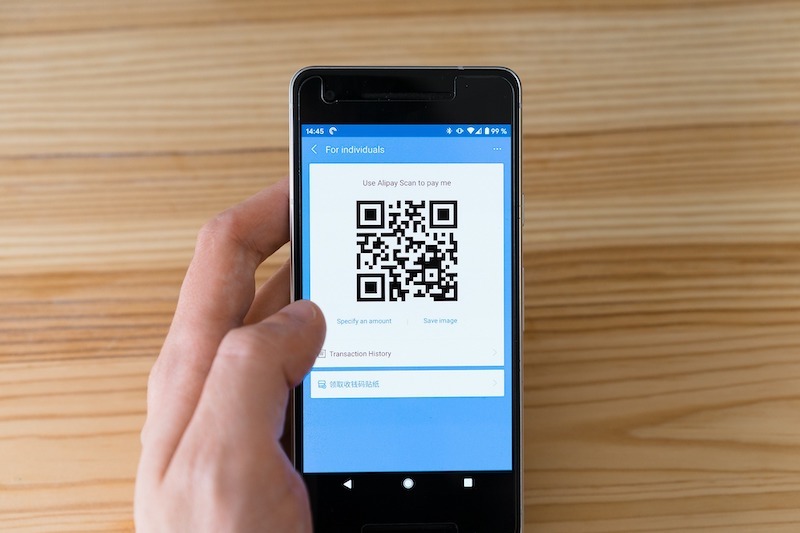
手機沒電
Jonas is talking to his mother, Fanny. They are shopping.
喬納斯正在和他的母親芬尼說話。他們正在購物。
Fanny: Let’s go to the checkout counter. Do you have your wallet with you?
芬尼:我們去結帳吧。你有帶錢包嗎?
checkout(n.)結帳counter(n.)櫃台wallet(n.)錢包
Jonas: No, but I can pay with my cellphone.
喬納斯:沒有,但我可以用手機付錢。
Fanny: How so?
芬尼:怎麼用?
Jonas: It’s a mobile payment. I don’t need to bring any cash or coins, and I just need to ask the clerk to scan the barcode on my cellphone.
喬納斯:這是行動支付。我不需要帶任何現金或零錢,只需要請店員掃描手機上的條碼就可以了。
cash(n.)現金coin(n.)硬幣ask sb. to do sth.要求某人做某事clerk(n.)店員scan(v.)掃描barcode(n.)條碼QR codeQR碼
Fanny: Wow, that’s so convenient.
芬尼:哇,那好方便。
convenient(adj.)方便的inconvenient(adj.)不方便的convenience(n.)方便convenience store便利商店
Jonas: Yep, and it’s faster when checking out.
喬納斯:對啊,而且結帳的時候還會比較快。
fast-faster-the fastestcheck out結帳、退房
Fanny: But you can’t pay if your phone is dead.
芬尼:但如果手機沒電的話,就沒辦法付錢了。
dead(adj.)死亡的
Jonas: That’s true. Some people may prefer not to use mobile payments because they don’t seem safe to them.
喬納斯:是沒錯。有些人因為覺得似乎不太安全,所以不傾向使用行動支付。
prefer(v.)偏好seem(v.)似乎safe(adj.)安全的
Fanny: I understand. But I want to try it. Can you show me how to use it?
芬尼:我理解。但我想試用看看。你可以教我怎麼用嗎?
understand(v.)理解、明白show(v.)解釋、說明
Jonas: Of course.
喬納斯:當然。