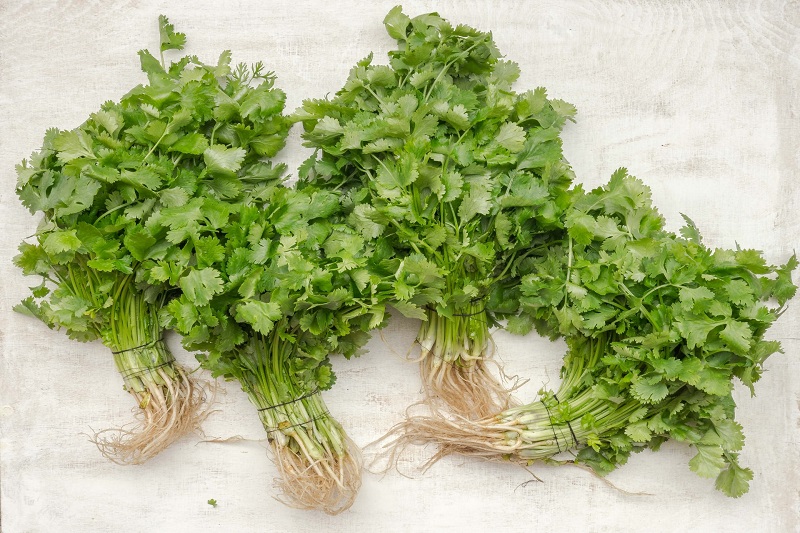
吃到肥皂味
Who doesn’t love the smell of freshly cut herbs?
誰不喜歡新鮮剛切好的香草的味道?
smell(n.)氣味cut(adj.)切下的herb(n.)香草
Herbs can add a fresh flavor to even the simplest dish.
即使是最簡單的菜餚,香草也可以增添新鮮的風味。
add(v.)增加flavor(n.)風味
However, some people dislike cilantro very much.
但是,有些人非常厭惡香菜。
dislike(v.)討厭
They say cilantro tastes like soap and keep it at a distance.
他們說香菜吃起來像肥皂,對它敬而遠之。
keep sth. at a distance與⋯保持距離
They’ll have a hard time finishing their salsa if there is cilantro in it.
如果莎莎醬裡面有香菜,他們將很難把它吃完。
have a hard time+Ving做⋯有困難salsa(n.)莎莎醬
Scientists discovered that for those cilantro-haters, they have special genes, and those genes allow them to strongly notice the soapy flavor in cilantro.
科學家發現,對那些討厭香菜的人來說,他們擁有特殊的基因,讓他們能強烈地注意到香菜中的肥皂味。
discover(v.)發現gene(n.)基因allow(v.)允許notice(v.)注意到soapy(adj.)含肥皂的
In Central America and India, cilantro is a very popular herb.
在中美洲和印度,香菜是非常受歡迎的香草。
popular(adj.)受歡迎的
Interestingly, there are fewer people with genes like these in those regions.
有趣的是,那些地區較少人有這樣的基因。
region(n.)地區
Some studies showed that nearly 20% of the population in East Asia experiences soapy-tasting cilantro.
有些研究顯示,東亞有將近20%的人口,感受到吃香菜會有肥皂味。
population(n.)人口experience(v.)經歷
If you are one of the cilantro-haters, at least you know it’s not your fault and you can go blame your parents.
如果你是討厭香菜的人之一,至少你知道這不是你的錯,你可以去怪罪你的父母。
at least至少fault(n.)錯誤、毛病blame(v.)責備、怪罪,blame sb. for sth.把某事怪罪於某人
By the way, to avoid the soapy taste in your dishes, you can change cilantro for parsley.
順帶一提,要避免菜餚中的肥皂味,你可以將香菜換成巴西里。
avoid(v.)避免parsley(n.)巴西里