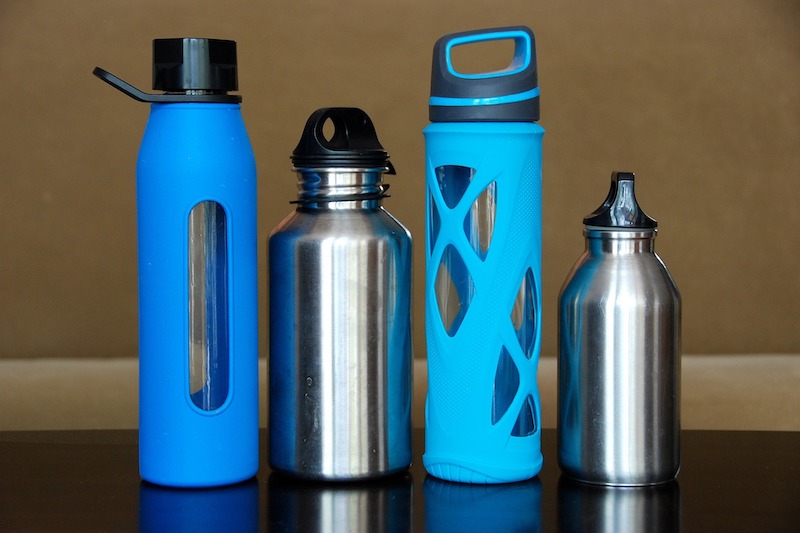
自帶保溫瓶
Jenny and Peter are friends. They are meeting up at the Xiangshan MRT station before going for a hike.
珍妮和彼得是朋友,他們約在象山捷運站碰面再一起去爬山。
meet up相約碰面做某事go for a hike踏青=go hiking
Peter: Hey, Jenny! Ready to go?
彼得:嘿,珍妮!準備好要走了嗎?
ready to RV準備好要~
Jenny: Wait. I forgot to bring my water bottle. I need to buy a bottle of water at that convenience store.
珍妮:等等,我忘記帶水壺了,我得去那邊的便利商店買瓶水。
forget to RV記得要~convenience store便利商店
Peter: Bottled water is a waste of money. Plus, plastic bottles not only create garbage, but also do harm to our health.
彼得:瓶裝水很浪費錢,而且,塑膠瓶不僅會製造垃圾,也有害健康。
bottled(adj.)瓶裝的plus(adv.)=also還有、而且create(v.)製造=producegarbage(n.)垃圾do harm to N(Ving)對~造成傷害=damage=hurt
Jenny: I thought plastic bottles became toxic only when we fill them with hot water.
珍妮:我以為塑膠瓶裝熱水的時候才有毒。
toxic(adj.)有毒的fill A with B 用B填滿A
Peter: Actually, we take in many tiny particles of plastic when we drink water from those bottles, no matter whether the water is cold, hot, or warm.
彼得:事實上,不管水的溫度多少,我們在喝塑膠瓶裝的水時,都會喝進許多叫做塑膠微粒的這種微小塑膠物質。
actually(adv.)=as a matter of fact事實上take in攝取、吃(喝)進plastic particles塑膠微粒=microplasticsno matter + 疑問詞=不論、不管
Jenny: If that’s the case, I think I’ll use a thermos next time.
珍妮:如果是那樣的話,我想我下次會開始用保溫瓶。
if that’s the case=in that case如果是這樣的話
Peter: Exactly. The truth is that everything made of plastic contains plastic particles, so we should just quit using all types of plastic containers and plastic bags.
彼得:很好,其實每個塑膠製品都含有塑膠微粒,所以我們應該停止使用塑膠容器或塑膠袋。
exactly(adv.)沒錯、完全正確contain(v.)包含=hasquit N(Ving)停止~=stop N(Ving)container(n.)容器
Jenny: Well, it’s not that easy, but I’ll try.
珍妮:嗯,那蠻不容易的,不過我會試試看。
that(adv.)那樣地