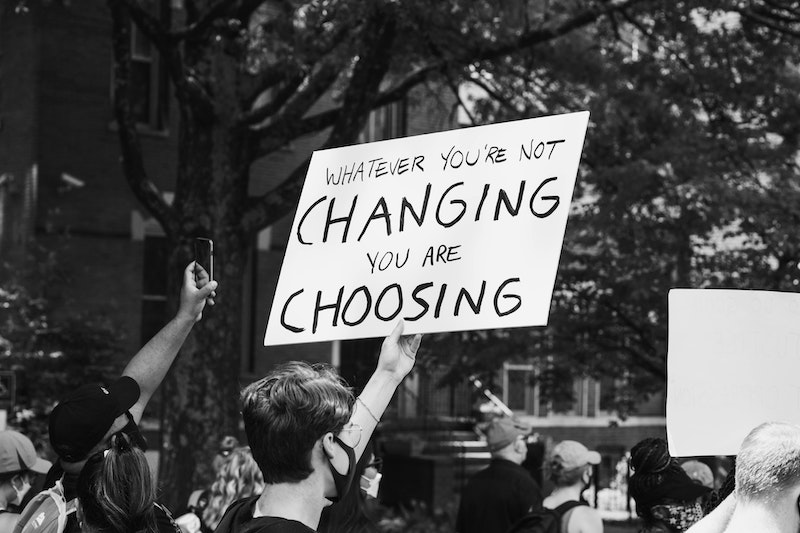
想法一致
The right to protest is a fundamental right in almost all democracies.
抗議權幾乎是所有民主國家的基本權利。
fundamental(adj.)基本的、基礎的、根本的
Through protesting, citizens are able to express discontent with current situations and demand social, political and economic change.
透過抗議,民眾得以表達對現狀的不滿,並要求社會、政治與經濟上的改變。
discontent(n.)不滿=discontentmentdemand(v.)強烈要求
Therefore, protests can benefit both citizens and democracy in several ways.
因此,抗議在某些方面對民眾與民主體制都有好處。
First, demonstrations and marches in public are good ways for individuals to see that there are “thousands of people who think the same way,” allowing them to know that they are not alone in their views.
首先,公開示威遊行是讓個人認知到有「數千人的想法一致」的好方法,讓他們知道他們並非唯一有這類想法的人。
demonstration(n.)示威、遊行march(n.)遊行go on a march參與遊行go on strike罷工in public公開地、當眾地in private私底下
In fact, it is through the large number of like-minded people who protest certain issues that debate becomes possible, which can eventually lead to changes being made by the government.
事實上,透過為數眾多且想法一致的群眾對某些議題提出抗議,才有可能展開辯論,最終促使政府作出改變。
like-minded(adj.)想法一致的、理念相投的(英)protest against sth.抗議某事debate(v.)(n.)辯論、爭論
Additionally, protests make it possible for minority groups who might not have their interests served by the government to speak out.
此外,抗議讓遭政府忽略的少數群體得以公開發表意見。
make it possible for sb. to do sth.讓某人可能做到某事minority(n.)少數majority(n.)多數interest(n.)利益、權益speak out (up)公開發表意見
Through exercising their right to protest, individuals in these groups can express their discontent with laws or policies that they feel unfair to their communities.
藉由行使抗議權,少數群體中的個人可以針對他們認為對其群體不公平的法律或政策表達不滿。
exercise(v.)行使right to freedom of peaceful assembly自由和平集會的權利
These concerns can sometimes lead to change as well, showing that protesting and voting are both actions that citizens can use to directly affect the political process in democracies.
這些關注有時也能促成改變,這也表示抗議與投票都是民眾可以用來直接影響民主國家政治進程的行動。
vote(n.)(v.)(投)票voter(n.)投票者、選民election(n.)選舉referendum(n.)全民公投petition(n.)連署