如何保護海洋動物?
Amber and Alex are travelling.
安柏和艾力克斯正在旅行。
be V-ing 現在進行式(正在…)travel(v.)旅行=go on a trip
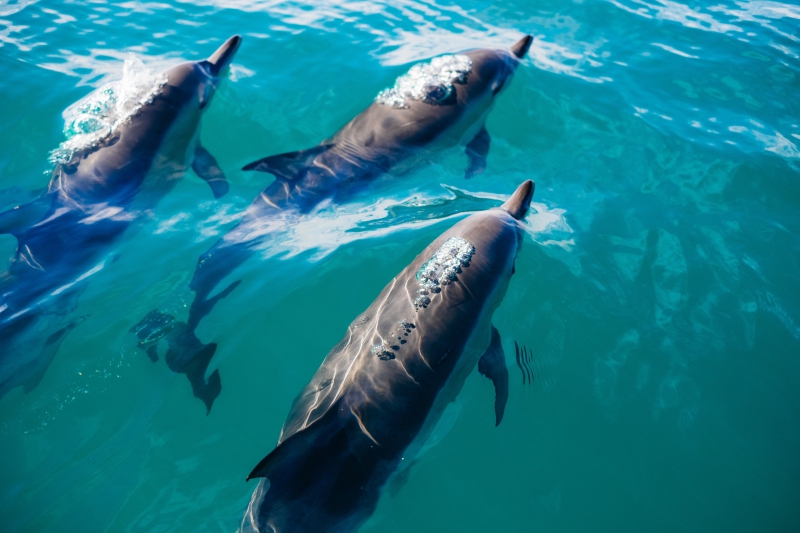
Amber: It’s time for some whale-watching. I can’t wait to see the whales and dolphins.
安柏:到了賞鯨時間了,我等不及要看鯨魚與海豚了!
can’t wait等不及…
Alex: Same here. I hope that I’ll be able to see not only the killer whales and gray whales, but also some of the marine birds like pelicans and bald eagles with my binoculars.
艾力克斯:我也是,希望用望遠鏡不只能看到殺人鯨、灰鯨,還可以看到海鳥,像是鵜鶘和白頭海鵰。
will be 未來式(將會…)be able to能夠not only… but also…不只…還有…marine(adj.)海洋的、航海的binoculars(n.)雙筒望遠鏡
Amber: By the way, I came across some sad news the other day. A Chinese white dolphin was found dead on the shore in Kinmen.
安柏:對了,我前幾天發現一件悲傷的消息:金門海邊發現了一隻死亡的中華白海豚。
come across sth.偶然看到、無意中發現=find, notice, discoverthe other day幾天前=a few days agofind-found-found發現be V-pp 被動語態(被…)shore(n.)岸邊=beach, coast, seashore
Alex: That’s terrible! The Chinese white dolphin is a rare species. Adult female dolphins give birth only once every three years, which means they’re able to give birth to up to only six baby dolphins in their lifetime.
艾力克斯:真糟糕!中華白海豚是稀有物種耶。成年雌豚每三年才能生一隻小海豚,這就意味著牠們一生最多只能生六隻幼豚。
rare(adj.)稀有的、罕見的species(n.)物種female(adj.)雌的、母的give birth (to) 分娩、生孩子up to高達…lifetime(n.)終生、一輩子
Amber: They’re apparently in danger of becoming extinct. They really need to be protected.
安柏:牠據說快瀕臨絕種了,真的非常需要保護。
apparently(adv.)據說、實際上、似乎in danger of sth…的危險性、發生…的可能=at risk, in jeopardyextinct(adj.)絕種的=vanished, disappeared
Alex: Why did the Chinese white dolphin die by the way?
艾力克斯:那牠為什麼會死掉呢?
Amber: The cause of its death is still unknown.
安柏:死亡原因依然不明。
cause(n.)原因=reasondeath(n.)死亡unknown(adj.)未知的
Alex: We really need to do our best to stop polluting the ocean waters.
艾力克斯:我們的確需要努力不要再污染海洋了。
do one’s best盡全力=give it one’s all, exert oneselfpollute(v.)污染