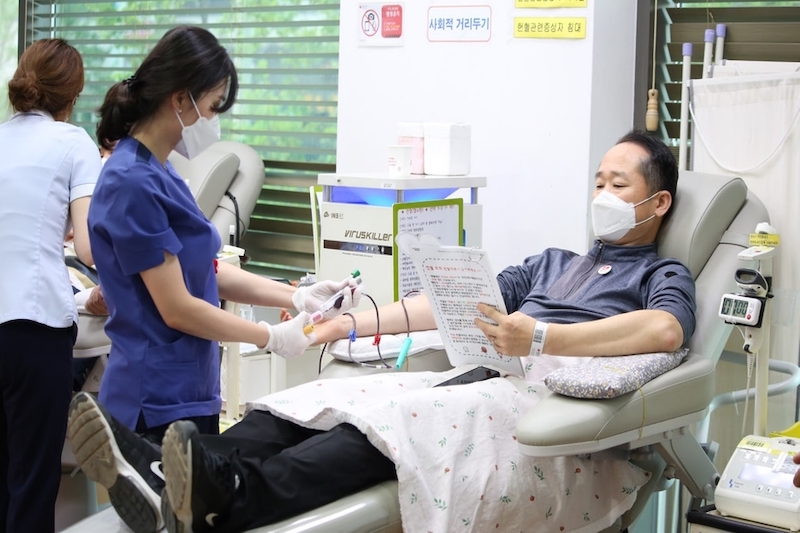
年輕人捐血意願低
Stephen and Sherry are nurses. They are having a conversation.
史蒂芬和雪莉是護士,他們正在對話。
Stephen: Hey, Sherry, have you heard about the blood shortage in Taiwan?
史蒂芬:嘿,雪莉,你有聽說台灣缺血嗎?
hear about聽說
Sherry: Oh, really? I didn’t catch that. What’s happening?
雪莉:真的嗎?我不太清楚,發生了什麼事?
catch(v.)發現、注意到
Stephen: Well, things are improving with COVID-19, and as hospitals are doing more surgeries, they need more blood. The problem is that not many young people want to give blood, especially those under 24.
史蒂芬:嗯,新冠疫情正在好轉,隨著醫院進行更多手術,他們需要更多的血液。問題是年輕人不太願意捐血,尤其是24歲以下的年輕人。
improve(v.)改善、改進surgery(n.)手術、外科手術undergo surgery接受手術perform surgery執行手術give blood捐血=donate blood
Sherry: That’s not good. Do you know why young people are donating less?
雪莉:那不好耶。你知道為什麼年輕人的捐血率降低了嗎?
donate(v.)捐獻donation(n.)捐助donor(n.)捐贈者
Stephen: I’m not sure but we should tell people that donating blood is important. If young people keep donating less, and with Taiwan’s population getting older, we could have a big problem.
史蒂芬:我不太清楚,但我們應該告訴人們捐血的重要性。如果年輕人捐血意願一直不高,再加上台灣的人口老化,我們可能會面臨大問題。
population(n.)人口
Sherry: That’s worrying. We should do something to encourage more young people to give blood and help save lives.
雪莉:真令人擔憂。我們應該做些什麼,鼓勵更多年輕人捐血,幫忙救命。
worrying(adj.)令人擔憂的encourage(v.)鼓勵encourage sb. to do sth.鼓勵某人去做某事encouragement(n.)鼓勵
Stephen: You’re right, Sherry. We should spread the word the importance of donating blood, especially among young people. Let’s see what we can do to help out.
史蒂芬:你說得對,雪莉。我們應該宣傳捐血的重要性,特別是針對年輕人。讓我們來看看能幫得上什麼忙。
spread the word散佈消息importance(n.)重要性especially(adv.)尤其是=particularly=specificallyhelp sb.out幫助某人擺脫困境