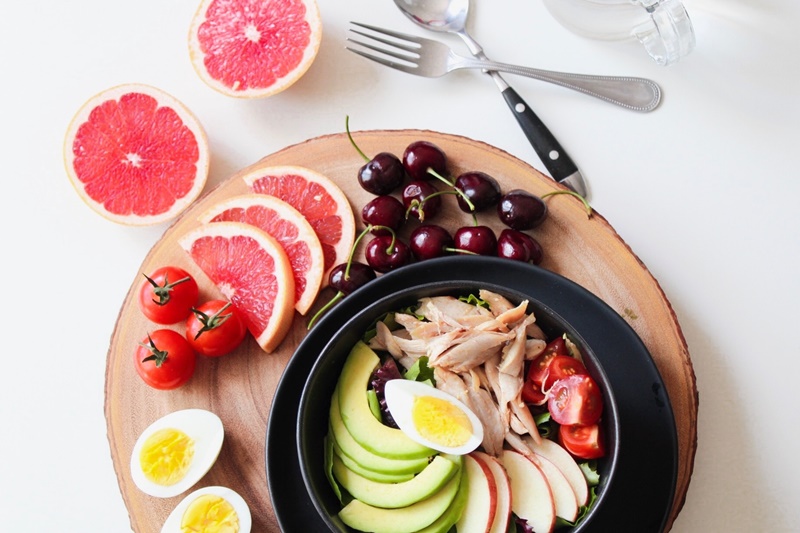
均衡飲食勝節食
Tony and Sarah are having lunch together. Sarah is reading a magazine.
東尼與莎拉正一起吃午餐;莎拉正在看雜誌。
magazine(n.)雜誌
Sarah: Hey Tony, did you see this article?
莎拉:嘿,東尼,你看過這篇文章嗎?
article(n.)文章
Tony: No, what does it say?
東尼:沒有,它說什麼呢?
Sarah: (Reading) New research shows carb diets are bad for your health.
莎拉:(朗讀)新研究證實碳水化合物飲食不益健康。
research(n.)研究show(v.)顯示、證實carb(n.)碳水化合物health(n.)健康
Tony: What is a “carb diet”?
東尼:什麼是「碳水化合物飲食」?
Sarah: Carbs, or carbohydrates, are a food group that includes potatoes, bread, rice, and corn. When you are on a “carb diet,” you either eat a lot or very little of these kinds of foods.
莎拉:醣類(或碳水化合物)是包含馬鈴薯、麵包、米飯或玉米的食物群組。當你執行「碳水化合物飲食」時,你不是吃「很多」就是吃「很少」這類的食物。
carbohydrate(n.)醣類、碳水化合物、澱粉類食物group(n.)群、組include(v.)包含、包括potato(n.)馬鈴薯bread(n.)麵包corn(n.)玉米when(conj.)當either(conj.)不是…就是…
Tony: Why do people do that?
東尼:人們為什麼要那麼做?
Sarah: Before, some people said that eating more or less of these foods might be good for your health. But now doctors say that those diets are very bad for you.
莎拉:之前,有些人說多吃或少吃這類食物可能對健康有益。但現在醫師說那種飲食對健康不利。
before(adv.)之前might(aux.)可能
Tony: Woah, so what is the right amount then?
東尼:等等,那麼正確的量是多少?
woah(excl.)且慢、慢點so(conj.)那麼amount(n.)數量
Sarah: It says that if carbohydrates make up half of what you eat every day then you will be fine. So you can eat white rice every day. Just don’t eat too much!
莎拉:報導說假如碳水化合物佔了你每天所吃的一半,那是可以的。因此你可以每天吃白米飯;就是不要吃太多。
if(conj.)如果、假如make up組成、構成half(pron.)一半what(pron.)…的so(conj.)因此、所以just(adv.)只是、僅僅
Tony: Phew! That’s good news.
東尼:呼!那是好消息。
phew(excl.)呼、啊news(n.)消息、新聞
Sarah: Yes, also try to eat less meat and more vegetables. Eating a lot of meat is also bad for your health.
莎拉:是啊,也要試著少吃肉多吃蔬菜。吃太多肉也對健康不好。
try(v.)嘗試
Tony: I see. So, it’s all about having a balanced diet.
東尼:我明白了;所以,重點就是均衡飲食。
see(v.)明白、了解balanced(adj.)平衡的
Sarah: Exactly!
莎拉:沒錯!
exactly(adv.)精確地