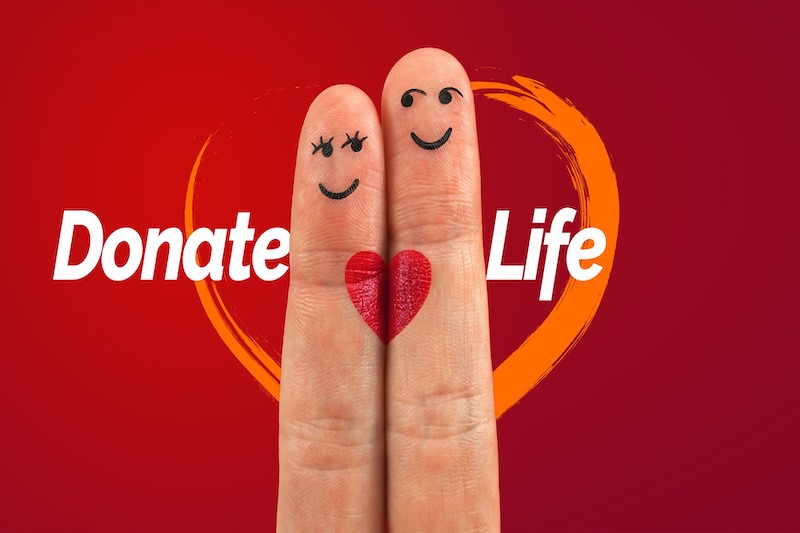
一年上千人等不及而去世
German lawmakers recently voted against a proposal that would have made everyone an organ donor unless they expressly said “no.”
德國議會最近否決一項器捐新制提案,提案內容為生前若未主動以書面拒絕,則一律默認死者同意器捐。
vote against~投票否決vote for~投票支持unless(conj.)除非=except ifexpressly(adv.)明顯地;明確地=explicitly
Doctors in Germany can transplant organs only from people who actively declare their consent, either by carrying a donor card or making a living will.
在德國,醫生只能從主動同意捐贈器官者,亦即身上有攜帶器捐卡或有立遺囑表示願意捐贈者身上移植器官,
transplant(n.)(v.)移植(器官)consent(n.)許可、允許、同意=agreementconsent to~=agree to~同意donor card器官捐贈卡living will生前遺囑
More than 1,000 people in the country of 83 million pass away each year while waiting for organ transplants.
德國8300萬人口中,每年有超過1000人在等待器官移植的過程中去世,
The vetoed proposal, submitted by a group of MPs led by Health Minister Jens Spahn of the Christian Democrats and by the Social Democrats’ health expert, Karl Lauterbach, was intended to reverse this principle and increase the number of needed organs.
被否決的議案由衛生部長史潘(基督教民主聯盟)和公衛專家勞特巴赫(社會民主黨)號召的國會議員提出,旨在顛覆這一原則,並增加可捐贈器官的數量,
vetoed 被否決的=rejectedsubmit(v.)(正式)繳交;提出submitted by…=which was submitted by…be intended to RV目的是…;旨在…=be meant to RVreverse(v.)扭轉、推翻、使徹底改變reversible(adj.)可逆的、(衣服)可兩面穿的irreversible(adj.)不可逆的reversible chemical reactions可逆的化學反應
They wanted to change the existing law so that German citizens would be automatically considered potential organ donors unless they opted out by putting themselves on a register saying they objected.
他們希望改變現行法律,將德國公民自動視為可能的器官捐獻者,除非他們登記表明不願意捐贈。
so that…如此一來就…;為了…=in order that…opt out選擇不參與;選擇退出opt in 選擇參與
After an emotional debate, where some lawmakers argued that the new “presumed consent” system raised legal and ethical concerns and questioned its effectiveness, the Bundestag voted 379-292 against the proposed system.
經過激烈的辯論,有些議員主張「不反對就是同意」的制度有法律和道德上的疑慮,且質疑新制度能否有效增加器捐人數,最後國會以379-292票否決了該提案。
presume(v.)假定;推定presumed consent假設性的同意ethics(n.)倫理(學)medical ethics醫療倫理ethical(adj.)道德的、(符合)倫理的
Germany will stick to a system of informed consent, by which only people who voluntarily register as organ donors are eligible.
德國將繼續施行「主動同意」制度,只有自願登記為器官捐贈者的人才符合器捐資格。
informed consent知情同意by which=whereby由此;從而;藉以eligible(adj.)符合資格的
Most EU countries have switched to an opt-out system, including Spain, Croatia, France, Ireland, Italy, Poland and Sweden, whereas countries such as the United Kingdom, Romania and Lithuania continue to adopt an express consent system.
多數歐盟國家已改採用「不反對即同意」制度,包括西班牙、克羅埃西亞、法國、愛爾蘭、義大利、波蘭和瑞典,而英國、羅馬尼亞、立陶宛等國則採用「主動同意」制度。
an opt-out system不反對即同意制度express consent言語明示同意
In fact, the number of organ donations in Germany is disturbingly low.
事實上,德國的器官捐贈案例少得令人堪憂,
disturbingly(adv.)令人憂心地=worryingly
There are currently more than 9,000 people on the waiting list for organs, while only 932 people consented to donation last year, a decrease of 23 compared to 2018.
目前有9000多人在排隊等待器捐,而去年只有932人同意捐贈,與2018年相比減少了23人。
decrease(n.)減少=reductioncompared to~相較於=compared with
Germany’s organ donation rate is fairly low compared to other countries, with 11.5 donors per million people. In Spain, that number is 48, while it’s 30.8 in the US.
與其他國家相比,德國的器官捐贈率相當低,每百萬人中有11.5個捐獻者;在西班牙為48,而在美國則是30.8。