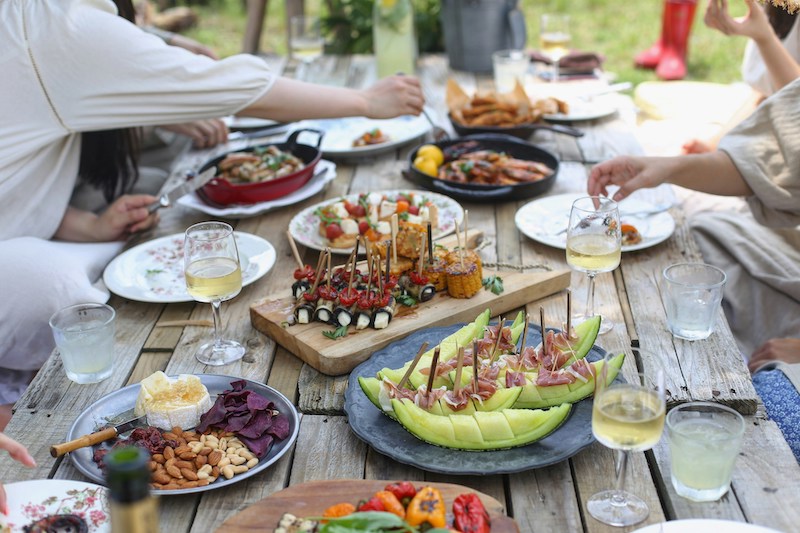
共食文化
Roger and Miriam are chatting while eating lunch in a restaurant together.
羅傑和米麗安正在餐廳吃午餐聊天。
Miriam: I really love that we can share food when we go out to eat.
米麗安:我真的很喜歡我們外出吃飯時可以一起分享食物。
share(v.)分享、分擔
Roger: What do you mean? Isn’t that normal?
羅傑:你是什麼意思?那不是很正常嗎?
normal(adj.)正常的
Miriam: Well, not in the U.S. When I go out to eat there, I don’t share my food with my friends.
米麗安:嗯,在美國不是這樣的。在那邊吃飯時,我不會和朋友分享自己的食物。
Roger: Oh! Well, in Taiwan it’s common to share everything. I think it’s the same in many Asian cultures.
羅傑:喔!在台灣,分享食物是很常見的事。我想這在許多亞洲文化中都一樣。
common(adj.)常見的common sense常識have...in common在~有共同點culture(n.)文化pop culture流行文化cultural(adj.)文化的cultural differences文化差異
Miriam: Really? Why? So you can eat different kinds of foods?
米麗安:真的嗎?為什麼呢?是因為可以吃到不同種類的食物嗎?
Roger: That’s one reason. But the main reason is to build stronger relationships with family and friends. In Asian cultures, being part of a community is very important.
羅傑:這是其中一個原因,但主要原因是為了和家人朋友建立更緊密的關係。在亞洲文化中,融入社群非常重要。
main(adj.)主要的relationship(n.)(人際)關係be in a relationship with sb.和~交往community(n.)社群、社區
Miriam: Ah! Well, that makes sense. It’s much different from eating only one dish by myself. Sharing food makes me feel like I’m actually eating with someone else.
米麗安:啊!嗯,那說得通。比起自己只吃一道菜,分享食物讓我覺得真的在和別人一起吃飯。
make sense合理different from與~不同difference(n.)不同
Roger: Well, I’m really glad you feel that way. See…it works!
羅傑:嗯,我很高興你有那樣的感覺。看吧……這方法有效!
work(v.)起作用
Miriam: Yes! And I think it makes the food taste better too.
米麗安:是啊!而且我覺得這讓食物變得更好吃了。
Roger: I feel the same way, Miriam.
羅傑:我也有同感,米麗安。