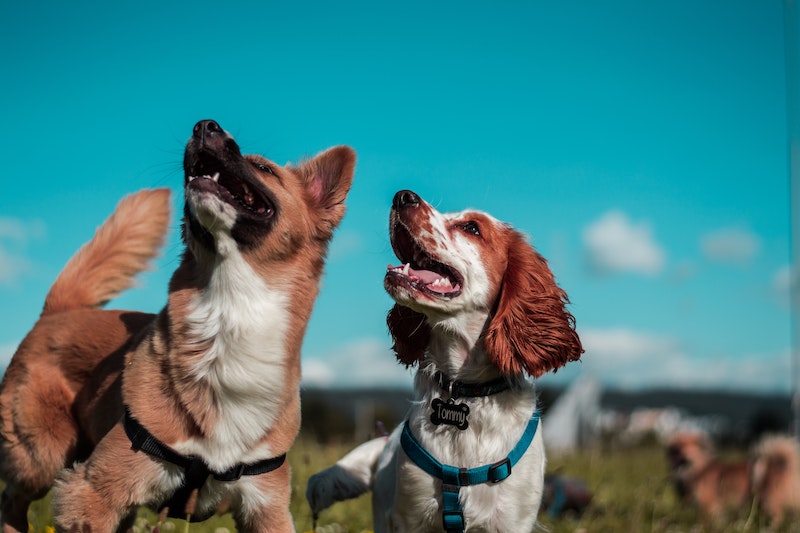
其實牠都懂
A study by the department of ethology at Eötvös Loránd University in Budapest, Hungary, found that dogs can tell the difference between languages and scrambled speech.
匈牙利布達佩斯市羅蘭大學動物行為研究系進行的一項研究發現,狗能區分語言與無意義的語句。
tell the difference=區分scramble(v.)語無倫次
The researchers had 18 dogs lay inside an MRI scanner.
研究團隊讓18隻狗躺在核磁共振掃描儀內,
Two of them were familiar with Spanish and the other 16 were well-versed in Hungarian.
其中兩隻狗熟悉西班牙語,而另外16隻精通匈牙利語。
familiar(adj.)熟悉的
The dogs listened to a female voice reciting a line from The Little Prince, first in Spanish, then in Hungarian.
這些狗會聽到一個女聲朗讀《小王子》中的一段話,第一次是念西班牙語,再來是匈牙利語。
The voice later began to say a series of gibberish.
女聲接著說出一串無意義的語句。
gibberish(n.)文理不通的話或文字
The experiment was designed to see how the dog’s brain would respond to familiar versus unfamiliar languages as well as natural speech versus scrambled speech.
設計這個實驗是為了觀察狗的大腦會對「熟悉與不熟悉的語言」以及「自然與無意義的語句」作何反應。
respond to=對~做出反應
The dogs showed much stronger brain activity in the primary auditory cortex for nonsense words than natural speech, regardless of what language was used.
無論使用什麼語言,當狗聽到無意義的語句時,大腦初級聽覺皮層的反應會比聽到自然語句更為活躍。
auditory(adj.)聽力相關的regardless of=無論如何;不管~
The researchers found the brain lit up in the secondary auditory cortex when it came to distinguishing between different languages.
研究人員發現,大腦次級聽覺皮層會在分辨不同的語言時開始運作。
distinguish(v.)區分;分辨
Also, the older the dog is, the better their brain is at distinguishing between the familiar and the unfamiliar language.
此外,年紀越大的狗,越能區分熟悉與不熟悉的語言。
The study suggests that the dogs might pick up on the auditory regularities of the language they are exposed to when they live with humans.
該研究指出,狗跟人類生活時會注意到牠們所接觸的語音規律。
pick up on=注意到expose sb. to=將某人暴露於
Attila Andics, head of the department of ethology at the university, said the findings on the dogs is similar to what we see with infants who can tell languages apart before they develop speech.
羅蘭大學動物行為研究系主任安迪克斯表示,這個發現類似於嬰兒在學會說話前就能分辨語言的情形。
be similar to=類似於