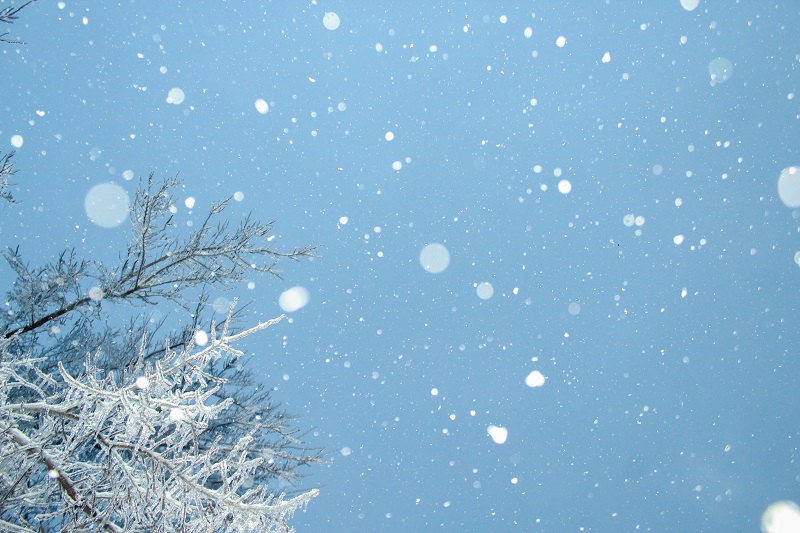
極端寒冷的早晨
Hailey and Luke are friends. They are watching the news together.
海莉和盧克是朋友。他們正在一起看新聞。
Hailey: Wow, look! What a beautiful sight. There was diamond dust in Hokkaido.
海莉:哇,看啊!多麼美麗的景象。北海道出現了鑽石塵。
sight(n.)所見之物、景象、視力
Luke: Diamond dust? I’ve never heard of that. What is it?
盧克:鑽石塵?我從來沒聽過這個。那是什麼?
Hailey: I looked it up. Diamond dust occurs when the sun shines on a freezing cold and humid day.
海莉:我查過了。當太陽照射在極度寒冷又潮濕的日子時,就會出現鑽石塵。
look up查閱、檢索freezing(adj.)(adv.)極冷的、冰冷的humid(adj.)潮濕的、濕潤的occur(v.)發生
Luke: Does it happen in the morning?
盧克:它是發生在早晨嗎?
Hailey: Yes, it only appears on winter mornings in extremely cold areas.
海莉:是的,它只會出現在極端寒冷地區的冬季早晨。
extremely(adv.)極端、極其extreme(adj.)極度的、極端的
Luke: I heard that Japan has had the strongest cold wave in ten years.
盧克:我聽說日本出現了十年來最強的寒流。
wave(n.)波、震動、浪(v.)揮、招手
Hailey: Yeah. There were even snow pellets in Okinawa at one point.
海莉:是的。在沖繩甚至一度出現了冰霰。
pellet(n.)小硬球、顆粒狀物、小彈丸、子彈at one point有一次、一度
Luke: I have a friend who lives in Okinawa. He sent me a picture of snow pellets falling early in the morning. He thought it was snow.
盧克:我有個朋友住在沖繩。他傳了一張清晨冰霰飄落的照片給我。他以為那是雪。
thought(v.)以為
Hailey: Ha! I would have thought so too if I were him.
海莉:哈,如果我是他,我也會以為是。