冷暖食材搭配
Eva and Kenny are friends. They want to have a feast on Friday night.
伊娃與肯尼是朋友,他們想在週五晚上吃頓大餐。
feast(n.)宴會、大餐
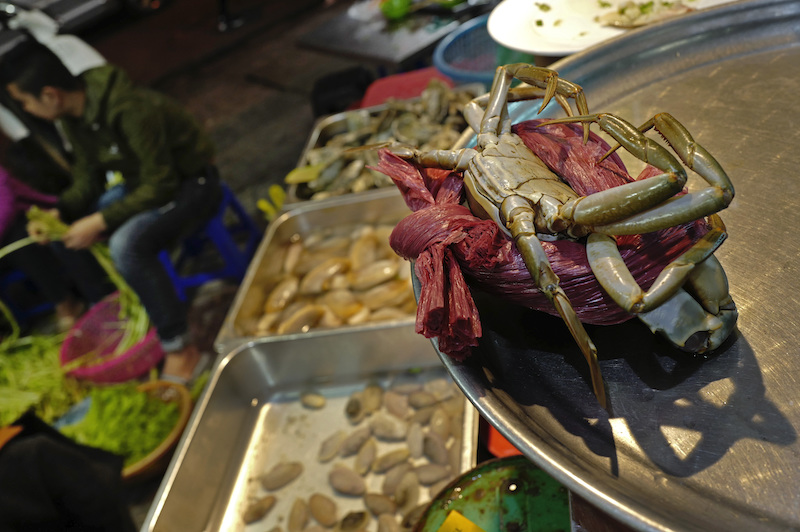
Eva: Did you know that crabs are in season now? I saw many fish stands selling crabs at the traditional market near here this morning.
伊娃:你知道現在是螃蟹的季節了嗎?我早上在附近傳統市場看到很多賣魚的攤子有賣螃蟹。
crab(n.)螃蟹in season當季stand(n.)攤販sell(v.)販售
Kenny: Yes, I know. The weather is getting cooler since fall is here now, and it’s also the best time of year to taste various crab dishes.
肯尼:是啊,我知道,秋天到了,天氣慢慢變涼,也是吃各式螃蟹料理的好時機。
taste(v.)品嚐various(adj.)各式各樣的crab(n.)螃蟹dish(n.)菜餚
Eva: It’s Friday! I think we should buy some crabs and steam them at home. I already found some recipes online.
伊娃:今天星期五!我覺得我們可以買一些螃蟹回家蒸,我有在網路上看到一些食譜。
crab(n.)螃蟹steam(v.)蒸recipe(n.)食譜
Kenny: But sometimes I get a stomachache after eating crab. According to Chinese medicine, crab is considered a “cold” food, and it must be balanced with warming foods.
肯尼:但有時候我吃螃蟹之後會肚子痛,根據中醫說法,螃蟹屬於「冷」的食物,要跟一些「暖」的食物中和。
stomachache(n.)肚子痛consider(v.)認為balance(v.)平衡
Eva: I know what you’re saying. We can steam the crabs with some ginger and perilla leaf.
伊娃:我知道你在說什麼,我們可以把螃蟹跟一些薑或紫蘇葉一起蒸。
steam(v.)蒸
Kenny: Sounds good. Let’s have a crab feast tonight!
肯尼:好棒,今天就吃螃蟹大餐吧!
feast(n.)宴會、大餐
Eva: But I think you shouldn’t eat more than two crabs since your stomach is rather sensitive.
伊娃:但我覺得你不能吃超過兩隻螃蟹,因為你的腸胃比較弱。
stomach(n.)胃sensitive(adj.)敏感的
Kenny: Sure. I’ll make some other side dishes that we can enjoy as well.
肯尼:當然,我會再做一些可以跟螃蟹配著吃的菜。
as well=too