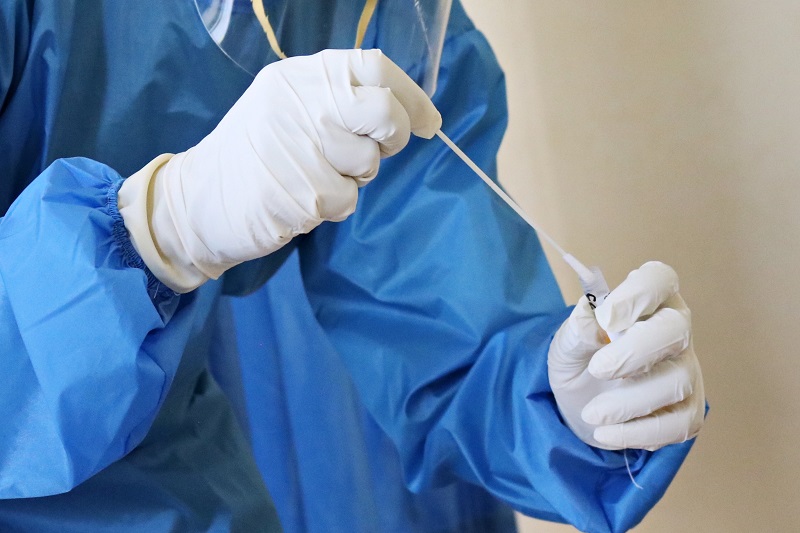
陰陽立判
Mark and Lucia are roommates. Mark was at a supermarket.
馬克和露西亞是室友。馬克剛剛在超市。
Mark: I saw some COVID self-test kits at the supermarket today.
馬克:我今天在超市看到了一些家用快篩試劑。
Lucia: Yeah. Now they’re on sale in supermarkets, local pharmacies and convenience stores.
露西亞:對啊。家用快篩試劑可以在全國的超市、藥局和便利商店買到。
pharmacy(n.)藥房、drugstore(n.)、chemist(n.)藥妝店
Mark: I didn’t know that. I was a bit surprised.
馬克:我之前不知道說。有點驚訝。
surprised(adj.)感到驚訝的
Lucia: How much is one kit?
露西亞:一套要多少錢?
Mark: It costs NT$1,500 and comes with 5 sets.
馬克:1,500元,裡面有5個試劑。
cost(v.)要價set(n.)組
Lucia: I read the instructions for using the test kit somewhere.
露西亞:我記得我有讀過試劑的使用說明。
instruction(n.)指示說明
Mark: What should people do if the test result is positive?
馬克:如果檢測結果陽性,應該怎麼做?
test result測試結果positive(adj.)陽性的、積極的
Lucia: First of all, they should stay calm and call the 1922 hotline or contact the local health agencies. Then they will be told what to do next.
露西亞:首先,一定要保持冷靜,之後可以撥打1922熱線或聯絡附近的衛生機構,會提供接下來的指示。
stay calm保持冷靜hotline熱線contact(v.)聯絡health agency衛生機構
Mark: What if the result is negative?
馬克:如果是陰性呢?
What if…如果…怎麼辦negative(adj.)陰性的、負面的
Lucia: Then they have to handle the used test materials carefully. The swab and the rest of the kit should be put into a plastic bag before getting thrown away.
露西亞:用過的快篩試劑要妥善處理,記得把棉棒和試劑的其他東西放在塑膠袋裡面再扔掉。
handle(v.)處理used(adj.)用過的material(n.)材料carefully(adv.)小心地swab(n.)棉棒=cotton bud or Q-tipthe rest of剩餘plastic bag塑膠袋throw away丟棄