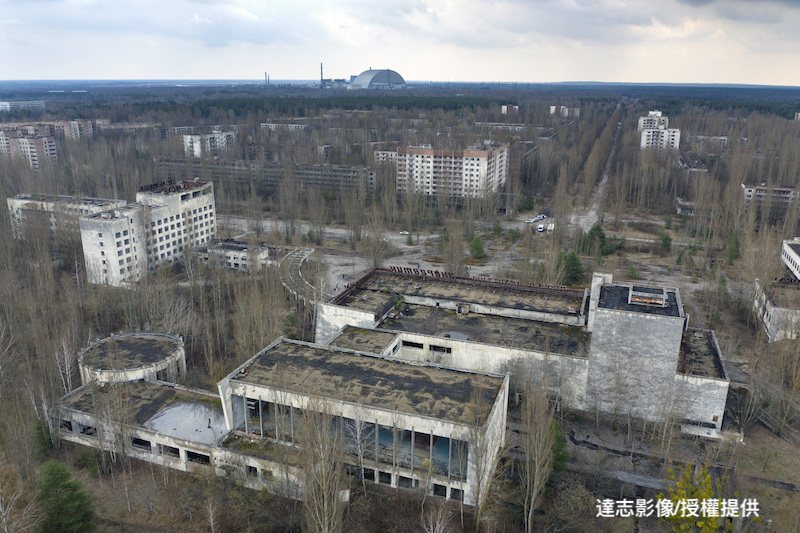
輻射將存在數千年
On April 26, 1986, the worst nuclear disaster in history occurred in the Chernobyl Nuclear Power Plant.
1986年4月26日,車諾比核電廠發生史上最嚴重的核事故。
occur(v.)發生
The accident began during a safety test. A series of missteps combined with design flaws led to two explosions.
該事件發生於安全測試期間,一連串的失誤與設計瑕疵引發兩起核爆事故。
accident(n.)意外;事故misstep(n.)失足;失誤combine A with B=將A跟B結合起來flaw(n.)瑕疵;缺陷explosion(n.)爆炸explode(v.)爆炸
The explosions killed two of the staff and seriously injured another.
該核爆事故奪走兩名員工的性命並嚴重傷及其他人員。
injure(v.)(使)受傷
A huge emergency operation began to put out the fires and clean up the nuclear material.
當局展開大規模的緊急行動撲滅火勢以及清理核廢料。
emergency(n.)緊急狀況;突發事件put out=撲滅
134 staff and firemen were hospitalized after absorbing high amounts of radiation.
134名員工與消防員因吸收了高劑量的輻射而送醫入院治療,
hospitalize(v.)將…送院治療absorb(v.)吸收radiation(n.)輻射
28 of them died in the next days to months, and another 14 died within the next 10 years.
其中28人於隔日至數月間相繼死亡,另有14人在十年內死去。
About 68,000 people were evacuated from the area.
當局將近68,000人撤離該區。
evacuate(v.)撤離;疏散
Some estimate that the area will continue to have dangerous amounts of radiation for hundreds of years, while others predict thousands of years.
該區的輻射劑量達到危險指數,預計將持續數百年,一些學者則預測輻射將持續存在數千年之久。
estimate(v.)估計;估算predict(v.)預料;預計
The accident at Chernobyl strongly affected public opinion on nuclear power and people began to fear similar incidents occurring at other plants.
車諾比核事故發生後,大眾對核能大為改觀,人們開始擔心其他核電廠也會發生類似事故,
affect(v.)影響fear(v.)害怕;擔憂similar(adj.)相似的
As a result, many countries decided to phase out their use of nuclear power.
許多國家因此決定淘汰核能的使用。
phase out=逐步淘汰phase in=逐步採用