養分匱乏存活術
Most plants use their roots and leaves to make their own food from water, minerals and carbon dioxide with the help of sunlight.
大部分植物用根和葉子,從水分、礦物質和二氧化碳,在陽光的幫助下,產生自身所需食物。
However, there are around 630 species of plants that eat meat to get their nutrients.
然而,大約有630種植物卻是藉由吃肉來獲得養分的。
nutrient (n.)養分,營養物;nutrition (n.)營養;poor nutrition營養不良
Although these plants still create food through photosynthesis, being carnivorous allows them to make the most of all available resources.
雖然這些植物還是會利用光合作用製造食物,可食肉的特性使它們得以充分利用所有可得資源。
photosynthesis (n.)光合作用make the most of sth. 充分利用
Meat-eating plants, though very different in shapes, sizes and colors, all share three common characteristics.
食肉植物雖然在形狀、大小和顏色方面差異很大,但卻有三樣共同的特徵。
characteristic (n.)特徵,特色
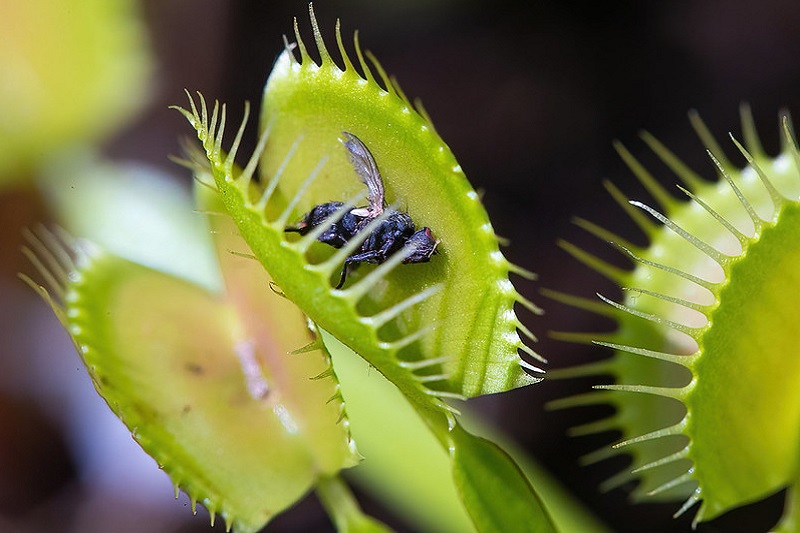
They capture and kill their prey, which include things like insects, spiders, lizards and small mammals, by trapping them with special leaves.
它們用特殊的葉子困住獵物,以捕捉並殺死牠們,包括昆蟲、蜘蛛、蜥蜴和小型哺乳類動物。
prey (n.)獵物;fall prey to sth. 成為……的犧牲品, 深受……之苦trap (n.)陷阱 (v.)使困住,設陷阱捕捉
Carnivorous plants have a way to digest the prey to get the nutrients from the food, either with enzymes the plant produces itself or with the help of bacteria.
食肉植物有辦法用自行製造的酵素或借助細菌來消化獵物,以從牠們身上獲取養分。
digest (v.)消化either A or B 不是A就是Benzyme (n.)酵素,酶
By eating meat, the plants get some significant benefits, like faster growth or more successful reproduction.
食肉植物藉由吃肉獲得極大好處,像是加快生長速度和提升繁殖成功率。
reproduction (n.)生殖,生育, 複製;reproduce (v.)生殖,生育,複製
Carnivorous plants generally live in habitats that are wet, including swamps, forests and sandy or rocky places.
食肉植物通常住在潮濕的棲息地,包括沼澤、森林和沙地或岩地。
habitat (n.)棲息地;inhabit (v.)居住;habitant (n.)居民
In these locations, they lure their prey into their traps using strong smells and bright colors.
在這些地點,它們用強烈的氣味和明亮的顏色引誘獵物進到陷阱中。
lure sb. into (doing) sth. 引誘某人做某事(或去某個地方)
It’s through these adaptations that meat-eating plants, like the Venus flytrap, are able to survive in nutrient-poor locations.
像是捕蠅草等食肉植物正是透過這些適應機制,才得以在養分匱乏的地方存活下來。
強調句:It is(was) + 強調部分 + that + 句子剩下部分