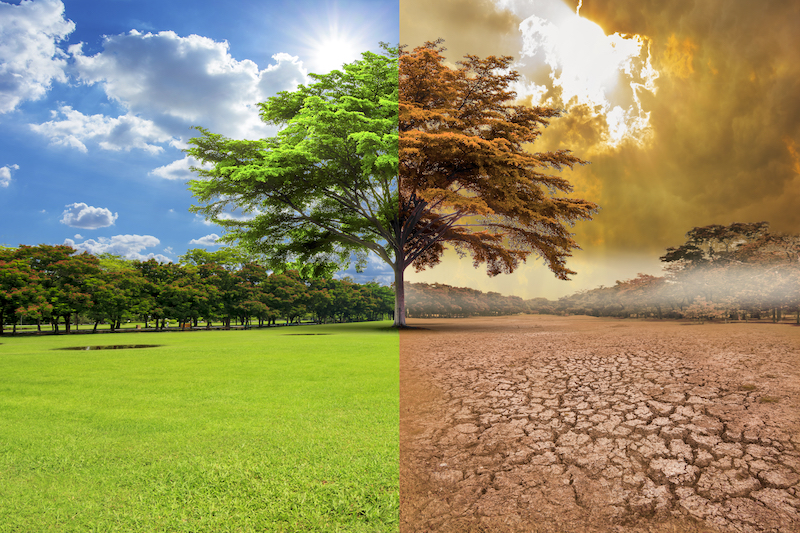
全球熱呼呼
The amount of carbon dioxide in the Earth’s atmosphere has officially reached the highest level in human history, resulting in the increase of the average global temperature.
二氧化碳的濃度已經正式達到人類史上的最高點,造成全球平均氣溫升溫。
atmosphere(n.)大氣層officially(adv.)正式地result in=cause導致
Researchers at Hawaii’s Mauna Loa Observatory measured the carbon dioxide concentration at 415 ppm.
夏威夷莫納羅亞火山天文臺測量到二氧化碳濃度值高達415ppm。
concentration(n.)濃度ppm=parts per million百萬分之一
According to climate expert Peter Gleick, the last time levels of carbon dioxide were this high was before humans existed.
根據氣候專家彼得格莱克指出,人類史上最近一次處於這樣高濃度的二氧化碳值,是在人類都不存在的史前時代。
this(adv.)這麼、如此
The high level of carbon dioxide prevents Earth’s natural cooling cycle from working, trapping heat near the surface of the atmosphere and causing global temperatures to rise.
高濃度的二氧化碳使得地球的自然冷卻機制無法正常運作,將熱氣集結於大氣層的邊緣,使全球氣溫升高。
trap(v.)收集、存著surface(n.)表面
The high levels are mainly due to the burning of fossil fuels and deforestation.
二氧化碳濃度如此的高,主要是由於燃燒化石燃料和砍伐森林而導致。
fossil fuel化石燃料deforestation(n.)濫砍樹木
Experts warn that climate problems will continue unless the world’s governments come together and take immediate action.
專家警告說,除非世界各國政府團結起來立即採取行動,否則問題將繼續存在。
come together一起討論immediate(adj.)立即的take action採取行動
The United Nations says that in order to regulate the increase of the global average temperature to within 2 °C, the concentration of carbon dioxide must be less than 450 ppm before the end of the 21st century.
聯合國表示,在21世紀結束前,二氧化碳濃度必須低於450ppm,才有可能將全球平均氣溫升幅控制在2℃之內。
regulate(v.)控制、調節