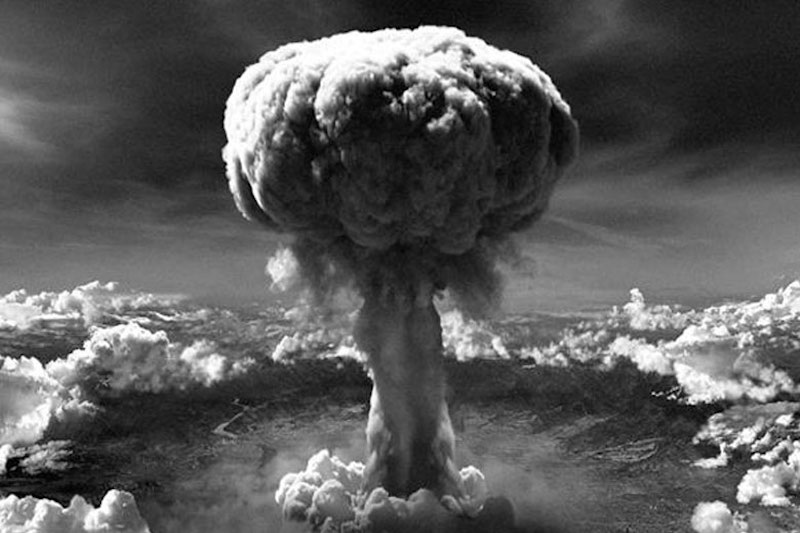
二戰核彈惡夢
Atomic bombs have only ever been used twice in history.
歷史上只用過兩次原子彈。
atomic(adj.)原子的in history=史上
Both were used during World War II and by the US on the Japanese cities of Hiroshima and Nagasaki.
兩次都是在二戰期間,由美國在日本廣島與長崎投下原子彈。
On July 26 1945, the Allies – now known as the United Nations – called for Japan to surrender, or else they would face “prompt and utter destruction.”
1945年7月26日,同盟國(即如今的聯合國)要日本投降,否則該國將面臨「立即且全面性的毀滅」。
be known as=以…為人所知call for=呼籲;要求surrender(v.)(n.)投降destruction(n.)摧毀;毀壞
Japan ignored the threat, and on August 6, the US dropped the first atomic bomb, nicknamed “Little Boy,” on Hiroshima.
但日本無視警告,於是美國在8月6日當天在廣島投擲首枚原子彈(其外號為「小男孩」)。
ignore(v.)不理會threat(n.)威脅;威嚇
The explosion killed 80,000 people instantly, and tens of thousands more died later from burn wounds and radiation sickness.
原子彈爆炸後瞬即奪走八萬人性命,成千上萬人之後死於燒傷以及輻射所引起的疾病。
explosion(n.)爆炸explode(v.)爆炸die from=死於…wound(n.)傷口radiation(n.)輻射
Despite this, Japan still did not surrender, so the US dropped a second atomic bomb, nicknamed “Fat Man,” three days later on Nagasaki.
儘管如此,日本仍不投降,因此三天後美國在長崎投下第二枚原子彈「胖子」,
despite(prep.)儘管
This time, 40,000 people were killed, and again, tens of thousands died later on.
而這次造成四萬人死亡,隨後亦有成千萬人相繼死去。
On August 15, Emperor Hirohito announced Japan’s surrender, marking the end of World War II.
8月15日當天,昭和天皇宣布日本投降,為第二次世界大戰劃下句點。
mark the end of sth.=為某事劃下句點
After seeing the terrifying power of the atomic bombs, an international agreement was made to stop using nuclear bombs and also prevent further spread of the weapons.
在目睹了原子彈的驚人威力後,各國訂定協議禁止使用與開發核武。
terrifying(adj.)可怕的agreement(n.)協議prevent(v.)防止;避免spread(v.)(n.)擴散;散播;蔓延