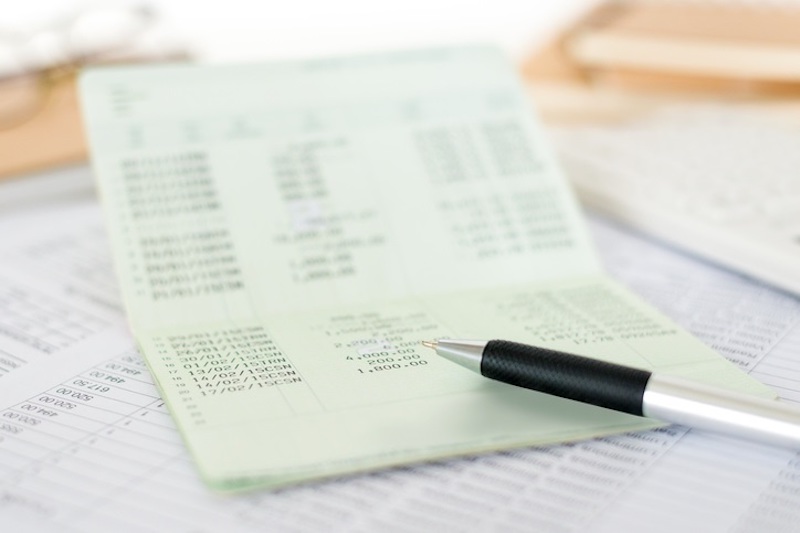
紀錄帳戶交易
Jane is cleaning out her desk with Ben’s help. She pulls out a small paper book.
本在幫珍整理書桌。她從抽屜裡拿出一本小冊子。
Jane: Hey, Ben, do you know what this is?
珍:嘿,本。你知道這是什麼嗎?
Ben: A passbook?
本:存摺?
Jane: I got it from my bank when I opened my account, but I just tossed it aside.
珍:我以前開戶的時候拿到的,但我就只是把它擱在一邊。
toss aside 拋棄、不接受~
Ben: So you’ve never used it?
本:所以妳從沒用過這本存摺?
never(adv.)從不、從未
Jane: No. What is it for?
珍:沒有欸,這是用來做什麼的?
Ben: It keeps a record of every transaction in your account.
本:它是用來紀錄帳戶交易的。
record(n.)(v.)紀錄keep track of sth. 紀錄~smash; shatter; break a record 打破紀錄transaction(n.)交易
Jane: How does it do that?
珍:怎麼紀錄?
Ben: You have to insert the passbook into a passbook printer in order to update it. You can find one at your bank.
本:妳得把存摺放入補摺機更新交易紀錄,在銀行可以找到一台。
insert sth. into 將某物插入~update(v.)(n.)更新
Jane: But can’t I just see my transaction records online?
珍:但不能直接上網查看交易紀錄嗎?
online(adv.)(adj.)線上(的)
Ben: Right. Before online banking became popular, passbooks were a convenient way to check one’s records. Now, passbooks are somewhat obsolete.
本:也行啊。在網路銀行普及化以前,用存摺查看交易紀錄很方便。存摺現在可說是被淘汰了。
obsolete(adj.)過時的、淘汰的outdated(adj.)過時的out of date (衣服樣式)過時的、不時興的old-fashioned(adj.)老派的、舊式的
Jane: I’m still interested to see how it works. I’ll update it the next time I go to the bank.
珍:我還是很好奇存摺是這麼運作的。下次去銀行的時候再更新看看。
interested(adj.)感興趣的